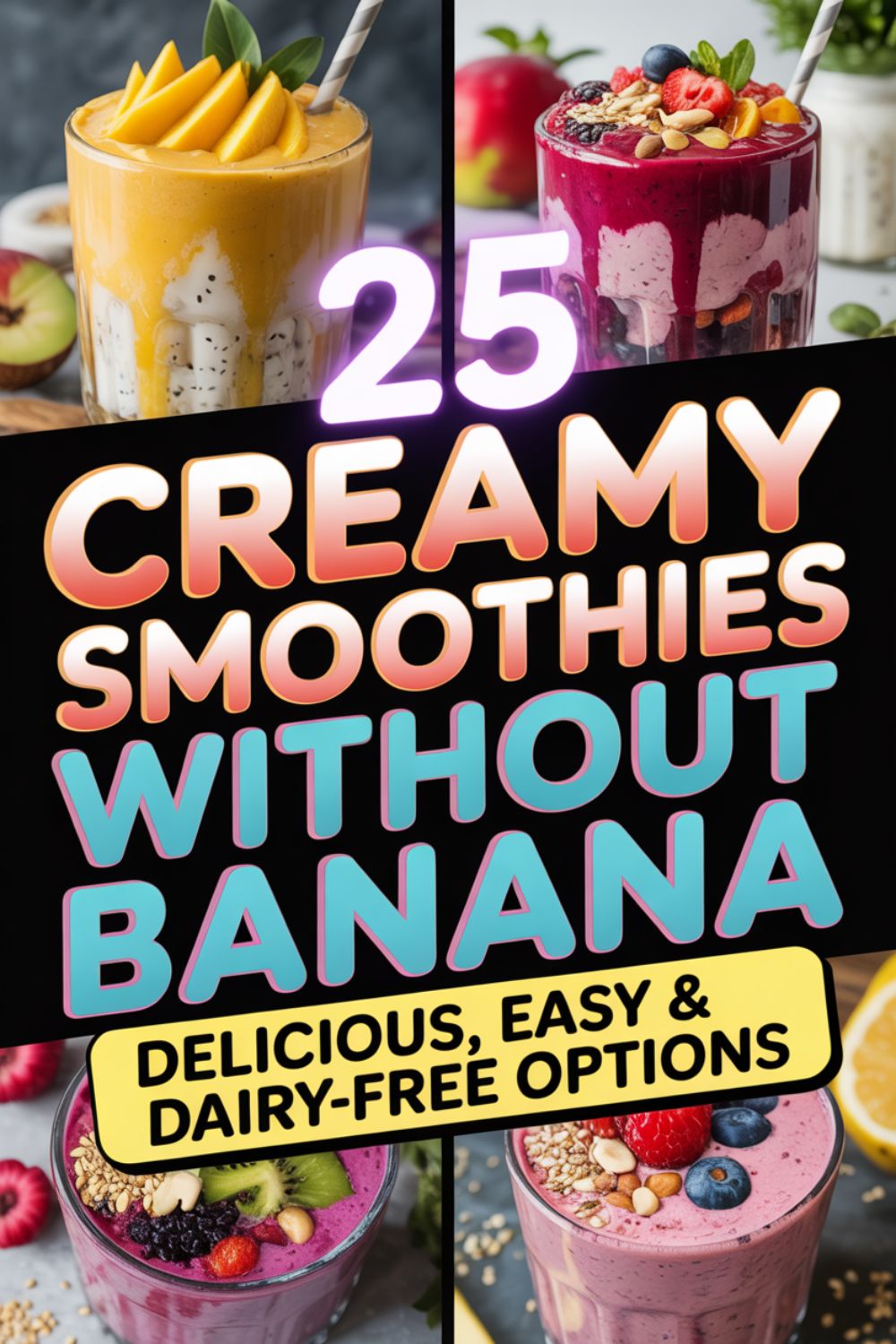
25 Creamy Smoothies Without Banana
Look, I get it. Bananas are basically the VIP of smoothie world—cheap, creamy, naturally sweet, and they hide the taste of whatever green sludge you’re trying to choke down. But what if you’re allergic, can’t stand the flavor, or just want something different? Turns out, you don’t need bananas to make a smoothie that tastes like dessert for breakfast.
I spent years thinking bananas were non-negotiable in smoothies. Then one day I ran out, threw in some frozen mango and Greek yogurt, and realized I’d been living a lie. The texture was still creamy, the flavor was better, and I didn’t have to deal with those brown banana bits in my freezer.
Here’s the thing about banana-free smoothies: they’re not just a workaround. They can actually be superior. Research from UC Davis found that bananas contain an enzyme that destroys up to 84% of certain beneficial compounds in berries and cocoa. So ditching bananas might actually boost the nutritional value of your morning blend.
Why Skip the Banana?
Before we jump into recipes, let’s talk about why you might want to give bananas the boot. Some people genuinely can’t eat them due to allergies or sensitivities. Others follow low-sugar diets and find bananas push their daily limits. And honestly? Some folks just don’t like the taste, which is totally valid.
Bananas also have a way of taking over the flavor profile. Ever notice how banana smoothies all taste vaguely the same regardless of what else you throw in? That’s not an accident. The fruit is strong enough to mask other ingredients, which is great when you’re hiding spinach from picky kids, but not so great when you actually want to taste those expensive organic berries you bought.
According to Northwestern Medicine, the key to a nutritious smoothie is balancing fiber, healthy fats, and protein—none of which require bananas. You can achieve that perfect creamy texture through other means, and often with fewer calories and less sugar.
The Secret to Creamy Texture Without Bananas
The biggest question I get is, “How do I get that thick, creamy texture without bananas?” Fair question. Bananas bring natural pectin and starch that make smoothies feel substantial. But you’ve got options, and some are actually better.
Frozen Fruit is Your Best Friend
Any frozen fruit will thicken your smoothie. Frozen mango is particularly good because it’s naturally creamy and sweet. Frozen cauliflower is the secret weapon—it adds body without any flavor. I know that sounds weird, but trust me on this one. I use about a half cup of frozen cauliflower florets in almost every smoothie now, and nobody has ever detected it.
Frozen avocado chunks are another game-changer. They make smoothies ridiculously creamy and add healthy fats that keep you full. Plus, you don’t have to worry about avocados going bad before you use them. I buy the pre-cubed frozen kind from Trader Joe’s frozen section, and they’re perfect.
The Yogurt Route
Greek yogurt is the MVP here. It’s thick, high in protein, and comes in non-fat versions if you’re watching calories. I usually go for plain because flavored yogurts pack in unnecessary sugar, but sometimes I’ll grab vanilla when I’m feeling fancy. Skyr and Icelandic yogurt work too—they’re even thicker than Greek yogurt.
For dairy-free folks, coconut yogurt is amazing. It’s naturally creamy and has a subtle sweetness that works well with most fruit combinations. Just check the label because some brands add a ton of sugar.
Nut Butters and Seeds
A tablespoon of almond butter, cashew butter, or even tahini will make your smoothie incredibly creamy. These also add protein and healthy fats, which according to WebMD, help slow down sugar absorption and keep you fuller longer.
Chia seeds are magical. When blended, they create this gel-like consistency that thickens everything up. I use a small coffee grinder to grind them first so they blend completely smooth instead of having that tapioca texture some people don’t like.
If you’re looking for more protein-packed breakfast ideas that’ll keep you satisfied, check out these high-protein meal plans that pair perfectly with smoothie routines.
25 Banana-Free Smoothie Recipes That Actually Taste Good
Alright, let’s get to the good stuff. These recipes are organized by flavor profile so you can find exactly what you’re craving. All measurements are approximate because smoothie-making isn’t an exact science, and you should adjust based on your taste preferences and how thick you like things.
Berry Bliss Smoothies
1. Triple Berry Greek
Blend 1 cup mixed frozen berries, 3/4 cup Greek yogurt, 1/2 cup unsweetened almond milk, 1 tablespoon honey, and a handful of spinach. The yogurt makes it thick enough to eat with a spoon. I make this one at least three times a week.
2. Strawberry Cauliflower Cloud
Combine 1 cup frozen strawberries, 1/2 cup frozen cauliflower florets, 1/2 cup vanilla yogurt, 3/4 cup milk, and 1 teaspoon vanilla extract. The cauliflower is completely undetectable but makes this unbelievably fluffy. Get Full Recipe.
3. Blackberry Coconut Cream
Mix 1 cup frozen blackberries, 1/2 can coconut cream, 1/2 cup coconut milk, 1 tablespoon maple syrup, and a pinch of vanilla. This one tastes like dessert but it’s surprisingly filling. The coconut cream from a can (I use this organic brand) makes it incredibly rich.
4. Raspberry Almond Butter
Blend 1 cup frozen raspberries, 2 tablespoons almond butter, 1 cup unsweetened almond milk, 1 tablespoon chia seeds, and a drizzle of agave. The almond butter gives it a satisfying richness that keeps you full until lunch.
Tropical Paradise Smoothies
5. Mango Coconut Dream
Combine 1 cup frozen mango chunks, 1/2 cup coconut yogurt, 1/2 cup coconut water, 1 tablespoon shredded coconut, and a squeeze of lime. This reminds me of vacation every single time. The lime is key—it brightens everything up.
6. Pineapple Ginger Zing
Mix 1 cup frozen pineapple, 1/2 cup Greek yogurt, 1/2 cup orange juice, 1-inch fresh ginger (peeled), and a handful of ice. The ginger gives it a spicy kick that’s surprisingly refreshing. I use a microplane grater to grate the ginger super fine.
7. Papaya Lime Cooler
Blend 1 cup frozen papaya, 1/2 avocado, juice of 1 lime, 1/2 cup coconut milk, and 1 teaspoon honey. Papaya is underrated in smoothies. It’s naturally sweet and has a buttery texture that makes everything creamy.
8. Pineapple Turmeric Sunshine
Combine 1 cup frozen pineapple, 1/2 teaspoon turmeric powder, 1/4 teaspoon black pepper (seriously, it helps turmeric absorption), 1 cup unsweetened almond milk, and 1 tablespoon cashew butter. This one’s great for reducing inflammation. Get Full Recipe.
For more anti-inflammatory meal ideas that work well alongside these smoothies, these anti-inflammatory recipes focus on reducing bloating naturally.
Green Goddess Smoothies
9. Avocado Mint Chocolate
Mix 1/2 avocado, 1 cup spinach, 2 tablespoons cocoa powder, 1 cup almond milk, 1/4 teaspoon peppermint extract, and 1 tablespoon maple syrup. This tastes like a mint chocolate shake, and the avocado makes it insanely creamy. Nobody ever guesses there’s avocado in it.
10. Cucumber Melon Refresher
Blend 1 cup frozen honeydew melon, 1/2 cucumber (peeled), 1/2 cup Greek yogurt, juice of 1/2 lime, and fresh mint leaves. Super hydrating and perfect for hot days. The cucumber adds volume without calories, which is pretty genius.
11. Spinach Peach Green
Combine 2 cups spinach, 1 cup frozen peaches, 1/2 cup Greek yogurt, 1/2 cup orange juice, and 1 tablespoon flax seeds. The peaches completely hide the spinach flavor, making this perfect for green smoothie skeptics.
12. Kale Pineapple Power
Mix 1 cup kale, 1 cup frozen pineapple, 1/2 avocado, 1 cup coconut water, and 1 tablespoon hemp seeds. Kale can be tough to blend, so I use a high-powered blender that pulverizes it completely smooth.
Meal Prep Essentials Used in These Smoothies
Making smoothies regularly is easier when you’ve got the right setup. Here’s what actually makes a difference in my kitchen:
- High-speed blender with personal cups – Blend and go, no extra dishes
- Silicone freezer trays – Pre-portion smoothie ingredients into cubes
- Glass storage jars with dates – Track freshness, stack efficiently
Digital Resources:
- 14-Day Flat Belly Meal Plan – Complete breakfast, lunch, and dinner under 500 calories
- 21-Day Gut Healing Plan – High-fiber recipes that complement smoothie routines
- 30-Day High-Protein Plan – Perfect for busy people who meal prep
Chocolate and Coffee Smoothies
13. Chocolate Peanut Butter Protein
Blend 2 tablespoons cocoa powder, 2 tablespoons peanut butter, 1 cup almond milk, 1/2 cup Greek yogurt, 1 tablespoon honey, and ice. This is my post-workout go-to. It tastes like a Reese’s cup but actually has 20+ grams of protein.
14. Mocha Almond Bliss
Mix 1 cup cold brew coffee, 1 tablespoon cocoa powder, 2 tablespoons almond butter, 1/2 cup Greek yogurt, and 1 tablespoon maple syrup. The coffee makes it energizing enough to replace your morning latte. I use cold brew concentrate to control the strength.
15. Chocolate Cashew Cream
Combine 1/4 cup raw cashews (soaked for 2 hours), 2 tablespoons cocoa powder, 1 cup almond milk, 2 dates, and a pinch of sea salt. Soaking cashews makes them blend into the silkiest cream you’ve ever tasted. Get Full Recipe.
16. Espresso Protein Shake
Blend 1 shot espresso (cooled), 1 scoop chocolate protein powder, 1 cup milk, 1 tablespoon almond butter, and ice. This replaces breakfast and coffee in one glass. The protein powder I use is plant-based with no weird aftertaste.
Creamy Dessert-Style Smoothies
17. Blueberry Cheesecake
Mix 1 cup frozen blueberries, 1/4 cup cream cheese (softened), 1/2 cup Greek yogurt, 1/2 cup milk, 2 tablespoons honey, and 1/4 teaspoon vanilla. The cream cheese makes this taste genuinely indulgent. Sometimes I crumble a graham cracker on top because why not.
18. Strawberry Shortcake
Combine 1 cup frozen strawberries, 1/2 cup vanilla yogurt, 1/2 cup milk, 1 tablespoon honey, and 1/4 cup rolled oats. The oats thicken it and add substance. You can throw the oats in whole or grind them first in a spice grinder for smoother texture.
19. Key Lime Pie
Blend 1/2 avocado, juice of 2 limes, 1 tablespoon lime zest, 1/2 cup Greek yogurt, 1/2 cup coconut milk, 2 tablespoons honey, and ice. The avocado creates that classic key lime pie creaminess without you ever tasting it. This one always surprises people.
20. Peaches and Cream
Mix 1 cup frozen peaches, 1/2 cup vanilla yogurt, 1/4 cup heavy cream, 1/2 cup milk, and 1 tablespoon honey. If you want it lighter, swap the heavy cream for coconut cream. Either way, it’s like drinking summer.
Looking for more balanced meal ideas? These blood sugar balancing meals maintain steady energy without the crashes.
Unique and Unexpected Smoothies
21. Carrot Cake Smoothie
Combine 1 cup grated carrots, 1/2 cup Greek yogurt, 1/2 cup milk, 2 tablespoons walnuts, 1 tablespoon maple syrup, 1/2 teaspoon cinnamon, 1/4 teaspoon nutmeg, and ice. I know it sounds weird, but it tastes exactly like carrot cake. The walnuts add crunch and healthy fats.
22. Sweet Potato Pie
Blend 1/2 cup cooked sweet potato (cooled), 1/2 cup Greek yogurt, 1 cup almond milk, 1 tablespoon almond butter, 1 tablespoon maple syrup, 1 teaspoon cinnamon, and ice. I meal prep baked sweet potatoes on Sundays specifically for smoothies. They freeze beautifully too.
23. Beet Berry Blast
Mix 1 small cooked beet (peeled and chopped), 1 cup mixed berries, 1/2 cup Greek yogurt, 1/2 cup orange juice, and 1 tablespoon chia seeds. The beets turn everything a gorgeous magenta color and add earthy sweetness. Just wear an apron because beets stain everything they touch.
24. Pumpkin Spice Latte
Combine 1/2 cup pumpkin puree, 1/2 cup cold brew coffee, 1/2 cup Greek yogurt, 1/2 cup milk, 1 tablespoon maple syrup, and 1 teaspoon pumpkin pie spice. Fall in a glass, available year-round because canned pumpkin exists. I use organic pumpkin puree with no added sugar.
25. Chai Spiced Pear
Blend 1 ripe pear (cored), 1/2 cup Greek yogurt, 1/2 cup milk, 1 tablespoon honey, 1/2 teaspoon chai spice blend, 1/4 teaspoon vanilla, and ice. Pears are underutilized in smoothies, which is a shame because they’re naturally creamy and work beautifully with warm spices.
Tools & Resources That Make Smoothie Life Easier
After years of daily smoothie-making, these are the tools that earn their counter space:
- Immersion blender with travel cup attachment – Great for single servings, easier to clean
- Reusable silicone smoothie bags – Pre-pack ingredients, freeze flat, blend from frozen
- Stainless steel straws with cleaning brush – No more soggy paper straws
Helpful Meal Planning Resources:
- 7-Day Hormone Balancing Plan – Improve mood and metabolism naturally
- 14-Day Gut Reset – Fiber and prebiotic-rich recipes
- 21-Day Blood Sugar Friendly Plan – Maintain energy without crashes
Tips for Perfect Banana-Free Smoothies Every Time
Making smoothies without bananas takes a little adjustment, but once you nail the technique, you won’t miss them. Here’s what I’ve learned through countless batches of trial and error.
Liquid Ratios Matter
Start with less liquid than you think you need. You can always add more, but you can’t take it back once it’s watery. I usually start with 1/2 cup liquid for every cup of frozen fruit, then add more gradually until I hit the right consistency. Your blender might need more or less depending on its power.
The type of liquid matters too. Milk creates a thicker smoothie than juice or water. Coconut milk from a can is the richest option. Almond milk is neutral and low-calorie. Orange juice adds natural sweetness but can make things too thin if you’re not careful.
Frozen vs. Fresh Fruit
Frozen fruit is non-negotiable for thick smoothies without bananas. Fresh fruit makes things too watery unless you add a ton of ice, which then dilutes the flavor. The exception is avocado—fresh avocado works perfectly and blends smoother than frozen.
According to NutritionFacts.org, freezing fruit may actually preserve more nutrients than fresh produce that’s been sitting in your fridge for days. So don’t feel bad about using frozen—it’s often nutritionally superior.
Sweetener Strategy
Most fruit is naturally sweet enough, but sometimes you need a little boost. Dates are my go-to because they add fiber along with sweetness. Medjool dates work best—just pit them first. Two or three dates will sweeten an entire smoothie without any processed sugar.
Honey, maple syrup, and agave all work fine. I prefer maple syrup for its mineral content and because it dissolves easily. Stevia works if you’re avoiding all sugars, but use it sparingly because it can taste bitter in large amounts.
Protein Additions
Adding protein turns a snack into a meal. Greek yogurt is the easiest way, giving you 15-20 grams per cup. Protein powder works too, but quality varies wildly. I’ve tried at least 15 brands, and most taste like chalk mixed with artificial sweetener.
The protein powder I actually enjoy is this organic pea protein blend. It’s not gritty, doesn’t have a weird aftertaste, and actually dissolves instead of clumping.
Nut butters add 7-8 grams of protein per two tablespoons, plus healthy fats. Silken tofu is another option—it blends completely smooth and adds substantial protein without any flavor. Just use the shelf-stable kind, not the refrigerated blocks.
For more high-protein breakfast options that work alongside smoothies, check out this 14-day protein-focused plan designed for muscle gain and fat loss.
Common Mistakes to Avoid
I’ve made every smoothie mistake possible, so let me save you some trouble. Here are the biggest ones that’ll ruin your banana-free creations.
Using Ice Instead of Frozen Fruit
Ice dilutes flavor. I learned this the hard way after making a strawberry smoothie that tasted like pink-tinted water. Frozen fruit gives you thickness and cold temperature without watering anything down. If you must use ice, use half the amount you think you need.
Not Pre-Softening Hard Ingredients
Things like cream cheese, nut butters, and dates blend better when they’re slightly soft. I take cream cheese out of the fridge 10 minutes before blending. For dates, I soak them in hot water for 5 minutes if they’re particularly dry and hard. Your blender will thank you.
Overloading the Blender
More ingredients doesn’t mean better smoothies. It means your blender motor screaming and chunks that won’t blend. I stick to 4-5 main ingredients max, plus liquid. If you’re adding extras like chia seeds or protein powder, reduce your fruit slightly.
Forgetting Fat
Fat makes smoothies satisfying and helps absorb fat-soluble vitamins from fruits and veggies. Without some fat, you’ll be hungry an hour later. Even a tablespoon of nut butter or a quarter avocado makes a huge difference in how long the smoothie keeps you full.
Meal Prepping Smoothie Ingredients
I meal prep smoothie ingredients every Sunday, and it’s genuinely changed my mornings. Instead of making decisions at 6 AM when I can barely function, I just grab a bag and blend.
Here’s my system: I use quart-sized freezer bags and portion out single servings of fruit, greens, and any add-ins like oats or seeds. I write the liquid amount on each bag with permanent marker so I don’t have to think. Then I stack them flat in a drawer in my freezer.
Some combinations I keep on rotation: tropical mix (mango, pineapple, coconut flakes), berry blast (strawberries, blueberries, raspberries), and green machine (spinach, frozen cauliflower, peaches). I make 7-10 bags at once, which covers me for at least a week.
The only things I don’t pre-portion are liquids and fresh items like avocado, which I add right before blending. This system takes maybe 20 minutes on Sunday and saves me that much time every single weekday morning.
If you’re interested in more meal prep strategies, these low-calorie meal prep ideas follow similar batch-cooking principles.
Smoothies for Specific Dietary Needs
Low-Sugar Options
Not everyone wants or needs the natural sugars in fruit. For lower-sugar smoothies, focus on vegetables, healthy fats, and protein. The Avocado Mint Chocolate and Cucumber Melon recipes work well here. You can also make savory smoothies with tomatoes, cucumber, bell peppers, and herbs—basically drinkable gazpacho.
Replace sweet fruit with lower-sugar options like berries, which have more fiber relative to their sugar content than tropical fruits. According to research discussed at Forks Over Knives, the fiber in whole blended fruit helps moderate blood sugar response compared to fruit juice.
High-Protein Builds
For protein-focused smoothies, you want at least 20 grams per serving. Combine Greek yogurt (15g) with protein powder (15-20g) and you’re easily over 30 grams. The Chocolate Peanut Butter Protein and Espresso Protein Shake recipes fit this category.
Cottage cheese is an underrated protein source for smoothies. It sounds gross, but when blended with fruit, it’s completely smooth and adds serious protein. I use the small-curd kind and blend it thoroughly with a high-speed blender so there’s no texture.
Dairy-Free Alternatives
Every recipe in this article can easily be made dairy-free. Swap Greek yogurt for coconut, almond, or cashew yogurt. Use plant-based milk instead of dairy milk. Coconut cream from a can replaces heavy cream perfectly.
The only challenge is protein, since Greek yogurt is such an easy protein source. You’ll need to rely more on protein powder, nut butters, and seeds. Hemp hearts are great because they add protein without much flavor.
For complete dairy-free meal planning, these anti-inflammatory recipes include many plant-based options.
Frequently Asked Questions
Can I make smoothies ahead and freeze them?
Yes, but with caveats. Pour smoothies into mason jars leaving an inch of space at the top (they expand when frozen). Thaw in the fridge overnight or on the counter for a few hours. The texture might separate slightly, so shake or blend briefly before drinking. I personally prefer prepping ingredients rather than finished smoothies because the texture is better fresh.
What’s the best banana substitute for thickness?
Frozen mango is the closest match in terms of natural creaminess and sweetness. Avocado wins for pure texture and healthy fats. Frozen cauliflower is the secret weapon when you want thickness without altering flavor. Greek yogurt works if you want protein along with creaminess. Honestly, I use different substitutes depending on the flavor profile I’m going for.
How do I make smoothies less watery without banana?
Use less liquid than you think you need—start with 1/2 cup per cup of frozen fruit. Always use frozen fruit instead of fresh. Add thickness with Greek yogurt, nut butters, avocado, or oats. If it’s already too watery, add more frozen fruit or a handful of ice and blend again rather than just accepting defeat.
Are banana-free smoothies healthier than regular smoothies?
Not necessarily healthier, but they can be depending on what you use. Research shows bananas can reduce the absorption of beneficial compounds in berries and cocoa. Banana-free smoothies often have less sugar if you use ingredients like avocado, cauliflower, or cucumber. But bananas also provide potassium and resistant starch, so it’s really about what works for your body and goals.
Can I use regular blender or do I need a high-speed one?
A regular blender works fine for most of these recipes, especially if you’re using softer ingredients like berries and yogurt. You’ll struggle with tough greens like kale or frozen cauliflower in a weak blender. If your blender is weak, soften ingredients first (thaw frozen fruit slightly, use spinach instead of kale) and add liquid gradually. I used a $30 blender for years before upgrading, and it worked fine for basic smoothies.
Final Thoughts
Bananas aren’t the enemy—they’re just not mandatory. Once you realize how many incredible banana-free options exist, smoothies become way more interesting. You’re not locked into that same banana flavor every morning, and you can actually taste the other ingredients you’re blending.
The biggest shift for me was understanding that creaminess comes from technique, not from one specific fruit. Frozen ingredients, healthy fats, and the right liquid ratio matter more than any single ingredient. Now I rotate through dozens of different smoothie combinations depending on what’s in season, what’s on sale, or just what sounds good that day.
Start with the recipes that sound most appealing to you. If you’re a chocolate person, try the chocolate cashew cream or mocha almond bliss. If you love berries, the triple berry Greek or blackberry coconut cream will become regulars. Once you get the hang of building smoothies without bananas, you’ll start improvising your own combinations.
The goal isn’t perfection—it’s finding smoothies you actually want to drink consistently. If you nail even three or four recipes from this list that become your regulars, you’ve won. Variety matters less than having reliable options that fit your taste preferences and nutritional goals.