25 Overnight Oats Under 300 Calories
That Actually Fill You Up
Let me guess — you’ve stared into the fridge at 7 a.m., half-asleep, knowing full well you should eat something before the day swallows you whole. But cooking feels like a mountain you didn’t sign up to climb this early. Overnight oats were the answer I stumbled into during one particularly chaotic week, and honestly, I’ve never looked back. Five minutes of effort the night before, and breakfast is done. No stovetop, no drama, no sad granola bar.
But here’s the thing: not all overnight oats are created equal. Some recipes out there casually waltz past 500 calories before you’ve added a single topping. If you’re trying to keep mornings light without feeling like you’re eating cardboard by 10 a.m., this list is for you. These 25 versions all clock in under 300 calories, and they actually taste like something worth waking up for.
Whether you’re meal-prepping a full week of jars on Sunday or just need one solid go-to recipe, there’s something here for every palate — berry-forward, chocolatey, tropical, nutty, spiced. Let’s get into it.
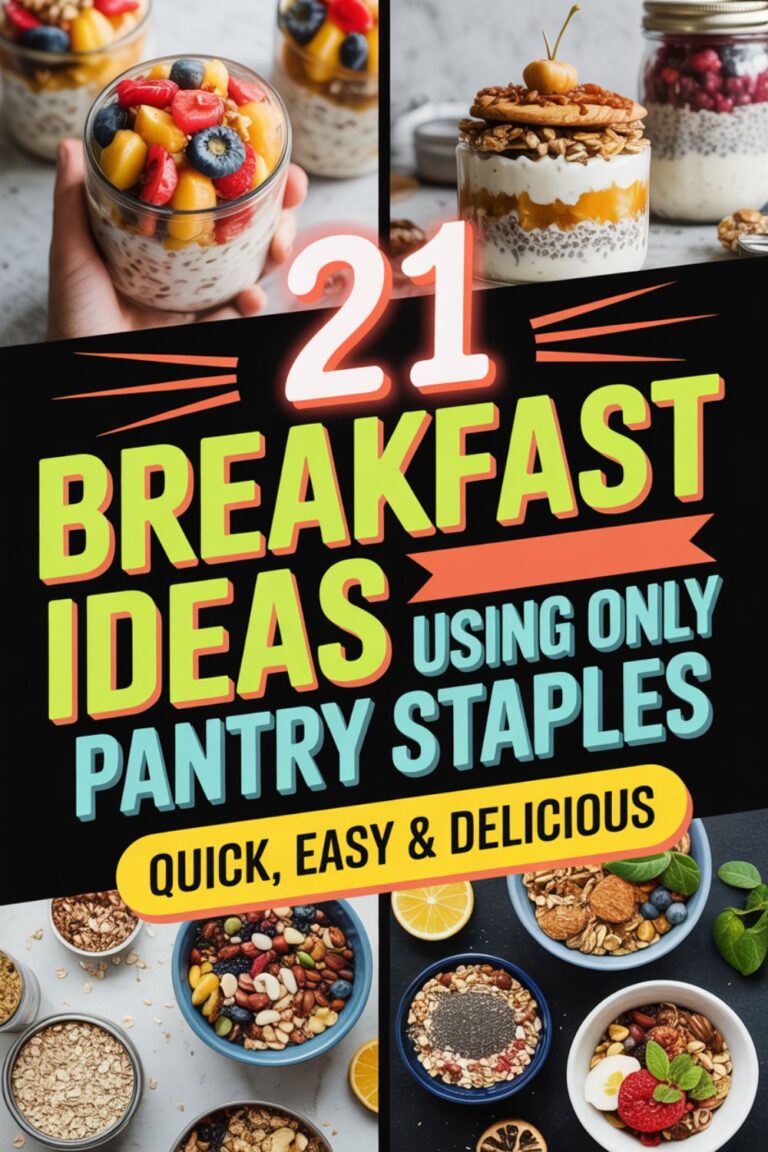
Overhead flat-lay shot of five glass mason jars filled with layered overnight oats, each topped with different garnishes: fresh blueberries and lemon zest, sliced strawberries with a drizzle of honey, banana coins and a swirl of peanut butter, dark chocolate shavings and raspberries, and diced mango with toasted coconut flakes. The jars sit on a worn linen cloth over a light cream-painted wooden surface. Soft, warm morning light streams in from the upper left, casting gentle shadows. A small pot of honey, a silver spoon, and scattered oats frame the composition. Food-blog aesthetic with a cozy, natural, rustic feel — optimized for Pinterest vertical crop.
Why the 300-Calorie Mark Actually Makes Sense
Before we start rattling off recipes, let’s talk about why 300 calories is such a useful benchmark for breakfast. It’s not about restriction for its own sake — it’s about balance. If your goal is to eat three balanced meals plus snacks throughout the day, starting with a 250–300 calorie breakfast leaves you enough room to actually eat lunch and dinner without performing mental gymnastics every time you open the fridge.
Overnight oats are genuinely useful here because oats contain a soluble fiber called beta-glucan, which forms a thick gel in your gut and slows digestion. Research reviewed by Healthline shows that beta-glucan promotes the release of peptide YY, a gut hormone that signals fullness, which is exactly why a modest bowl of overnight oats can keep you satisfied until lunch without loading you up with calories you didn’t ask for.
The trick to keeping things under 300 calories is knowing which ingredients earn their spot in the jar. Unsweetened almond milk or oat milk as the base saves you roughly 60–80 calories compared to whole dairy milk. A teaspoon of pure maple syrup or a few drops of vanilla stevia adds sweetness without the sugar avalanche. And if you’re adding protein through Greek yogurt, go for a fat-free or low-fat version — the texture is still incredibly creamy, but the calorie difference is meaningful.
Swap regular milk for unsweetened almond milk in any overnight oats recipe and you’ll instantly knock 50–80 calories off the base — without losing a drop of creaminess.
The Base Formula You Need to Know
Before we get into specific recipes, here’s what every overnight oats jar under 300 calories is built on. Get this ratio right and you can customize endlessly without blowing your calorie budget.
- 1/3 cup old-fashioned rolled oats — roughly 120 calories. Never use instant oats; they turn to mush overnight.
- 2/3 cup unsweetened almond or oat milk — around 20–35 calories depending on brand.
- 1/4 cup non-fat Greek yogurt — adds about 35 calories and serious creaminess.
- 1 tsp chia seeds — 16 calories, but they thicken everything beautifully and add fiber.
- A touch of sweetener — 1 tsp maple syrup or a few drops of stevia keeps sugar low.
- Toppings — fresh fruit, a small spoon of nut butter, a light sprinkle of granola.
With this base, you’re sitting around 175–190 calories before toppings. That leaves you a solid 100+ calorie cushion to make the jar genuinely exciting. FYI, the difference between a great overnight oats jar and a mediocre one almost always comes down to toppings — they’re where the personality lives.
The 25 Overnight Oats Recipes Under 300 Calories
Classic and Comforting
Fruity and Fresh
Use frozen fruit instead of fresh in your overnight oats. It thaws overnight and releases its natural juices directly into the oats, adding flavor and color without any added sugar or prep work.
Chocolate and Indulgent-Tasting
High-Protein Variations
I meal-prepped five jars of the blueberry lemon and the mocha cold brew on a Sunday and it completely changed my mornings. I stopped skipping breakfast entirely. Three weeks in and I’m down almost four pounds — just from actually eating breakfast consistently.
— Mariam K., from our meal prep communitySpiced and Warming
Tropical and Dairy-Free
Seasonal and Special
Prep five jars in 15 minutes on Sunday night. Label them Monday through Friday. You’ve just eliminated the most stressful decision of your morning for an entire week.
Smart Swaps That Keep Calories Low Without Killing the Joy
One of the most common overnight oats mistakes I see is treating the recipe like it’s untouchable. You swap one ingredient and suddenly feel like you’ve broken some sacred rule. IMO, swapping is half the fun — and it’s also how you stay under your calorie budget without feeling deprived.
The biggest calorie drivers in most overnight oats recipes are full-fat nut butters, sweetened yogurts, dried fruit, and granola toppings. None of these are bad, but portion size is everything. A tablespoon of almond butter is around 98 calories. Two tablespoons is 196 — just from the nut butter alone. That’s before you’ve added oats, milk, or anything else. Powdered peanut butter, on the other hand, gives you the same nutty richness for about 25 calories per tablespoon.
Similarly, dried mango or raisins can add 80–120 calories to a jar in what feels like a small sprinkle. Fresh or frozen fruit gives you more volume, more fiber, and far fewer calories. When it comes to sweeteners, a little goes a long way: pure maple syrup, a drizzle of honey, or even a mashed half-banana all add natural sweetness without triggering a blood sugar spike the way refined sugar does.
On the milk front, the difference between unsweetened almond milk (around 30 cal per cup) and whole dairy milk (around 150 cal per cup) is genuinely significant when you’re keeping breakfast under 300 calories. That doesn’t mean dairy is off the table — a splash of whole milk for richness is perfectly fine. But if you’re using dairy as your main liquid, opt for skim or 1%, and use Harvard’s Nutrition Source guidance on oats and satiety as your benchmark: even a small serving of oats packs genuinely substantial fiber and staying power when paired with the right liquids and proteins.
How to Meal Prep These Like a Pro
Overnight oats are one of the most forgiving meal-prep foods out there. You can make five jars on a Sunday, store them in the fridge, and eat through them Monday to Friday without any noticeable dip in quality. The key is knowing which toppings to add in advance and which to hold back until morning.
Anything stirred into the base — fruit, spices, cocoa, yogurt, sweeteners — can go in the night before without any issue. Fresh fruit that you’re layering on top, like banana or cut strawberries, should be added in the morning since they can oxidize or get mushy after 24 hours. Granola, nuts, and seeds are always morning-addition items; they turn soggy if they sit in the oats overnight, and nobody wants that.
For storage, a wide-mouth mason jar is the gold standard. I use wide-mouth 16-oz mason jars with leak-proof lids and they’re perfect for overnight oats — easy to stir in the morning, portable enough to eat on the go, and they stack cleanly in the fridge. Whatever jar you use, make sure the lid seals tightly; oats absorb surrounding fridge smells if they’re left uncovered.
Overnight oats keep for up to five days in the fridge, though the texture is best in the first three. If you like a thinner consistency, add a splash of milk in the morning before eating. If you prefer something thicker and more pudding-like, reduce the liquid slightly when you prep them and let the chia seeds do the rest of the work.
Set out all five jars in a row on your counter before prepping. Assemble them in batches — add the oats to all five, then the milk to all five, then the yogurt, and so on. It’s faster than doing them one by one and feels satisfyingly efficient.
Meal Prep Essentials Used in This Plan
Here are the tools and products I actually use for overnight oats meal prep — the ones that make the whole process easier and more enjoyable. Not trying to sell you anything you don’t need; these are just genuinely useful.
Wide-mouth glass mason jars with lids — stackable, dishwasher-safe, and the ideal size for overnight oats. The wide mouth makes stirring and topping much easier than narrow jars.
A compact digital kitchen scale is the single best tool for keeping your oat portions honest. Eyeballing half a cup of oats can be surprisingly unreliable.
An insulated single-jar carrier with a handle keeps your breakfast cold during the commute. No sad lukewarm oats on the bus.
Pairs perfectly with these oat recipes. Full week of balanced meals structured for low-calorie, high-satisfaction eating.
Perfect for pairing with these naturally sweetened overnight oats. The plan keeps blood sugar steady all day long.
An entire collection of make-ahead morning ideas beyond overnight oats. Great for rotation when you need variety.
Tools & Resources That Make This Easier
A quick round-up of the things that consistently make overnight oats prep faster, less messy, and more enjoyable. Friend-to-friend recommendations, nothing more.
A stainless steel measuring cup and spoon set that hangs together on a ring is a small upgrade that genuinely reduces the morning drawer chaos. You’ll use it every single day.
Small 2-oz leak-proof containers are perfect for pre-portioning your morning toppings the night before — granola, nuts, nut butter — so you’re not fumbling with lids at 6 a.m.
Chalkboard-style reusable jar labels with a marker let you write the day of the week or the flavor on each jar. Sounds like a small thing. Makes a big difference when you have five identical jars in the fridge.
Overnight oats are inherently gut-friendly thanks to their prebiotic fiber content. This plan builds on that foundation with a full month of high-fiber, probiotic-rich meals.
When you’re eating overnight oats consistently, a blood sugar balancing plan for the rest of your meals makes the whole day feel more even and energized.
A curated list that includes overnight oats variations and other blood-sugar-friendly morning options. Great companion resource.
The Most Common Overnight Oats Mistakes (And How to Fix Them)
Using the Wrong Type of Oats
This one comes up constantly. Instant oats are processed to cook quickly, which means they absorb liquid too fast and turn into a paste overnight. Steel-cut oats go in the other direction — they’re too dense to soften fully, even after eight hours. Old-fashioned rolled oats are the sweet spot. They absorb liquid at exactly the right pace, ending up with a creamy-but-still-textured consistency that actually feels satisfying to eat.
Not Measuring the Liquid Correctly
The ideal ratio is roughly 1 part oats to 1.5 to 2 parts liquid. Go too low on liquid and you get a dense, dry jar that’s unpleasant to eat. Go too high and it becomes soupy. If you’ve ever woken up to a jar of oat soup, now you know why. Start with a 1:1.5 ratio and adjust based on how thick you like it.
Adding All Toppings the Night Before
Crunchy toppings — granola, nuts, seeds meant for texture, fresh delicate fruit — go on in the morning. Full stop. Anything that can hold up to soaking (frozen berries, spices, extracts, cocoa) can go in the base the night before. This distinction matters a lot for texture.
Skipping the Salt
A tiny pinch of salt in overnight oats does the same thing it does in baking — it amplifies every other flavor in the jar. You won’t taste it as “salty.” You’ll just notice that the oats taste more like themselves. Don’t skip it.
I’d tried overnight oats three times and given up each time because the texture was just off. Turns out I was using instant oats and not enough milk. Once I switched to rolled oats with the right liquid ratio, they were completely different. I’ve made them every week for two months now.
— James T., community readerFrequently Asked Questions
Can overnight oats really be eaten cold?
Yes, and most people prefer them cold once they get used to it. The chilled texture is thick and creamy, almost like a pudding. If you truly prefer them warm, you can microwave them for 60–90 seconds in the morning, but add a splash of extra milk first since they thicken significantly overnight.
How long do overnight oats last in the fridge?
Up to five days, but the texture is best within the first two to three days. After that, the oats can become overly soft and the flavors tend to blur together. If you’re prepping for a full week, consider making a second batch mid-week for the best results.
Are overnight oats good for weight loss?
They can be a useful tool, particularly because they’re filling, fiber-rich, portion-controlled, and easy to prepare in advance. The beta-glucan fiber in rolled oats has been shown to support satiety, which may help reduce overall calorie intake through the day. That said, the toppings and add-ins matter enormously — a jar loaded with honey, granola, and nut butter can easily pass 500 calories.
What’s the best milk to use for overnight oats under 300 calories?
Unsweetened almond milk is the lowest-calorie option at around 30 calories per cup. Oat milk is slightly higher (around 60–90 calories per cup, depending on the brand) but adds a naturally creamy texture and subtle sweetness that pairs beautifully with oats. Both work well. Avoid sweetened versions of any plant milk — they add unnecessary sugar and calories.
Can I make overnight oats without yogurt?
Absolutely. Yogurt adds creaminess and protein, but it’s entirely optional. Without it, your oats will have a slightly thinner, lighter texture that many people prefer. You can also substitute with a tablespoon of chia seeds for a thicker, pudding-like consistency without adding many calories.
The Bottom Line
Twenty-five recipes, one jar, and zero cooking required. That’s the whole pitch for overnight oats under 300 calories, and it genuinely holds up. The barrier to a good breakfast has never been effort — it’s always been planning. Once you spend 10 minutes on a Sunday prepping jars for the week, the excuse of “I didn’t have time” quietly disappears.
Start with two or three recipes from this list that sound genuinely appealing to you. Get a feel for the base ratio, understand which toppings survive the overnight soak and which don’t, and then start riffing. The best overnight oats jar is the one you’ll actually look forward to eating — whether that’s chocolate raspberry or maple cinnamon vanilla or something you invented at 11 p.m. on a Tuesday.
The 300-calorie limit isn’t about deprivation. It’s about giving yourself enough breakfast to fuel the morning without closing the door on the rest of the day. Pick a recipe, prep the jar, and wake up to a breakfast that’s already done. You earned it.