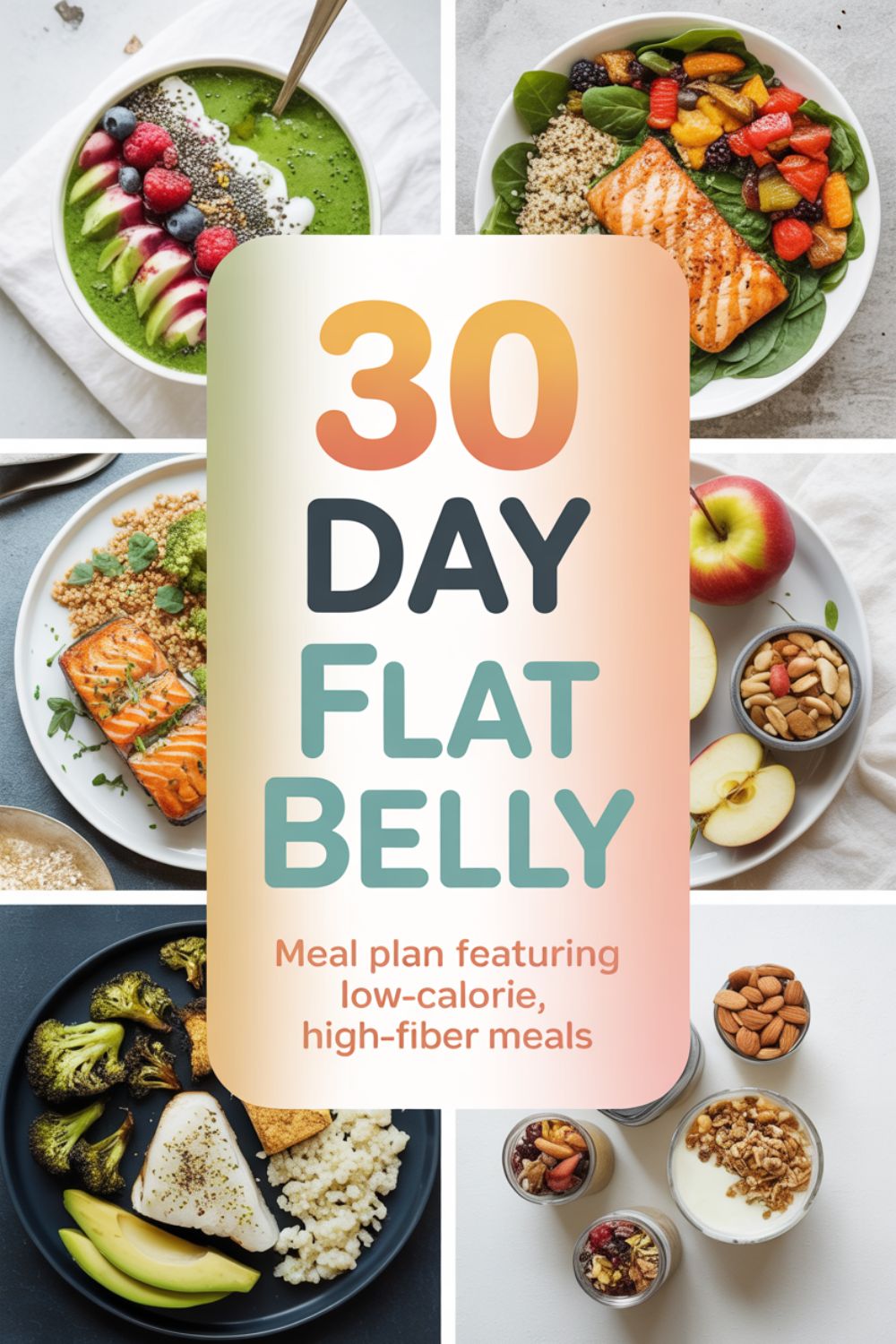
30-Day Flat Belly Meal Plan Featuring Low-Calorie, High-Fiber Meals
Look, I’m not going to sugarcoat this—getting a flat belly isn’t about magic pills or wrapping yourself in plastic wrap like a human burrito. It’s about eating smart, filling your plate with the right stuff, and giving your digestive system something it can actually work with. That’s where high-fiber, low-calorie meals come into play.
I’ve spent the last month testing this 30-day meal plan on myself, and honestly? The results were better than I expected. No starvation, no weird shakes that taste like cardboard, just real food that keeps you full and helps your body do what it does best. Ready to ditch the bloat and feel lighter? Let’s get into it.
Why High-Fiber, Low-Calorie Meals Actually Work
Here’s the thing about fiber that nobody really explains properly: it’s like a broom for your digestive tract. According to Mayo Clinic, dietary fiber doesn’t just help with regularity—it actually plays a massive role in controlling blood sugar, lowering cholesterol, and keeping you feeling full longer. When you pair that with a low-calorie approach, you’re basically creating the perfect storm for dropping belly fat.
The beauty of this combination? You’re not walking around hangry all day. Fiber expands in your stomach, sending signals to your brain that you’re satisfied. Meanwhile, keeping calories in check means you’re running at a deficit, which forces your body to tap into stored fat for energy. It’s simple biology, and it works.
Think about the difference between eating a plain bagel versus a bowl of oatmeal topped with berries and chia seeds. Both might have similar calories, but the oatmeal keeps you full until lunch while the bagel has you raiding the snack drawer by 10 AM. That’s fiber doing its job.
The Science Behind Belly Fat Loss
Your belly is usually the first place to show weight gain and, frustratingly, often the last place to slim down. But when you consistently eat meals high in fiber and moderate in calories, something interesting happens. Research from Harvard Health shows that the type of food you eat influences how your body processes calories—it’s not just about the numbers on a nutrition label.
Fiber-rich foods require more energy to digest, meaning your body actually burns calories just breaking them down. Plus, they slow down the absorption of sugar into your bloodstream, preventing those insulin spikes that tell your body to store fat around your midsection. It’s like having a metabolic advantage built right into your meals.
Setting Up Your 30-Day Journey
Before you dive headfirst into this plan, let’s talk strategy. I’m not a fan of the “start Monday” mentality because honestly, why wait? Pick a day, prep your kitchen, and commit to the full 30 days. That’s the timeframe your body needs to adapt, for your taste buds to recalibrate, and for you to actually see results that stick.
What You’ll Need to Get Started
First things first—your kitchen needs a little setup. I’m talking about having the right containers for meal prep (I personally swear by these glass containers with snap-lock lids because they’re microwave-safe and don’t stain), a decent food scale if you want to be precise about portions, and honestly, a quality vegetable chopper will save you so much time when you’re prepping vegetables for the week.
You’ll also want to stock your pantry with essentials: rolled oats, quinoa, brown rice, canned beans (rinse them to reduce sodium), chia seeds, and flax seeds. For the fridge, keep Greek yogurt, leafy greens, a variety of colorful vegetables, lean proteins like chicken breast and fish, and plenty of fresh fruit. Having everything on hand means you won’t be tempted to order takeout when hunger strikes.
Understanding Your Calorie Sweet Spot
Here’s where people usually mess up—they either eat too few calories and end up exhausted, or they underestimate portions and don’t create enough of a deficit. For most people aiming for steady fat loss, a deficit of about 500 calories per day is the sweet spot. That translates to losing roughly one pound per week, which might not sound dramatic, but it adds up to 4-5 pounds over the month.
Women typically do well on 1,400-1,600 calories daily for this type of plan, while men might aim for 1,800-2,000. But honestly, these are just starting points. If you’re super active or have a physically demanding job, you’ll need more. If you’re more sedentary, you might need slightly less. Listen to your body—if you’re consistently exhausted or lightheaded, bump up your intake a bit.
Week-by-Week Breakdown
Week 1: The Adjustment Phase
Not gonna lie, the first week can feel a bit rough. Your body is used to whatever you were eating before, and suddenly you’re flooding it with fiber. You might feel a little bloated at first—that’s normal. Your digestive system is adjusting. Drink tons of water, like seriously, way more than you think you need. Fiber without water is like trying to sweep a floor without a dustpan—it doesn’t work.
For breakfast during week one, I recommend starting with overnight oats. They’re ridiculously easy to prep the night before, and you can customize them however you like. Get Full Recipe for my go-to version that includes chia seeds, almond milk, and fresh berries. The combination gives you about 8 grams of fiber right out of the gate.
Lunch should be centered around greens. Think big, colorful salads with a palm-sized portion of protein—grilled chicken, baked tofu, or canned tuna all work great. Skip the store-bought dressings loaded with sugar and make your own with olive oil, lemon juice, and herbs. Using this salad dressing shaker bottle makes mixing your own dressings stupidly simple, and you can make enough for the whole week in about two minutes.
If you’re looking for more structured breakfast ideas that go beyond oats, you might love these high-protein breakfast recipes or this Mediterranean-style smoothie bowl that’s packed with fiber and keeps you full for hours.
Week 2: Finding Your Rhythm
By week two, you should be settling into a groove. The initial bloating usually subsides, and you’ll start noticing you’re not as hungry between meals. This is when fiber really starts showing its benefits. Your energy levels should be more stable throughout the day—no more mid-afternoon crashes that send you face-first into a bag of chips.
This is the week to experiment with different whole grains. Quinoa, farro, bulgur—they all bring something different to the table. I rotate through them to keep things interesting. Get Full Recipe for a Mediterranean quinoa bowl that’s become my weekly staple. It’s loaded with chickpeas, cucumber, tomatoes, and a tahini dressing that’s absolutely addictive.
Dinner should incorporate more vegetables than protein if you’re aiming for that flat belly effect. I’m talking about plates that are two-thirds vegetables, one-third lean protein. Roasted vegetables are your best friend here—toss them with a tiny bit of olive oil, season generously, and roast at high heat. A silicone baking mat is clutch for this because nothing sticks, and cleanup is literally just rinsing it off.
Week 3: The Sweet Spot
Week three is where the magic happens. Your clothes should be fitting differently—not dramatically different, but noticeably looser around your midsection. Your digestion should be running like a well-oiled machine. This is also when you might notice your skin looking clearer, which is a nice bonus from all the fiber and nutrients you’re packing in.
Now’s the time to get creative with your meals. Try a veggie-packed chili using three different types of beans, or experiment with lentil-based dishes. Get Full Recipe for my favorite lentil and vegetable soup that’s so hearty you forget it’s only about 250 calories per bowl.
For snacks, keep it simple but strategic. Apple slices with a tablespoon of almond butter, carrots and hummus, or Greek yogurt with berries. Speaking of Greek yogurt, I’ve been using this electric yogurt maker to make my own—it’s cheaper in the long run, and you control exactly what goes in it. No added sugars, no weird stabilizers, just pure, protein-rich yogurt.
Week 4: Solidifying New Habits
You’re in the home stretch. By week four, eating this way should feel less like a “diet” and more like just how you eat now. The key at this stage is not getting complacent. Keep weighing and measuring portions, because it’s easy to let serving sizes creep up when you’re feeling good about your progress.
This is also when you should be thinking about what comes next. This isn’t a 30-day crash diet—it’s a foundation for sustainable eating. Think about which meals you loved and which ones you could live without. Build a rotation of 10-15 recipes you genuinely enjoy, and you’ll never feel restricted.
For inspiration on maintaining this momentum, check out these complete 30-day meal planning guides and quick weeknight dinner options that stick to the same principles but offer different flavors and cuisines.
Key Meal Components to Master
Breakfast: Front-Load Your Fiber
Breakfast sets the tone for your entire day. If you start with something fiber-rich and protein-packed, you’re way less likely to overeat later. Beyond oats, consider high-fiber toast (look for bread with at least 5 grams of fiber per slice) topped with mashed avocado and a poached egg. Or try chia pudding—let chia seeds soak in almond milk overnight, and you’ve got a creamy, pudding-like breakfast that delivers about 10 grams of fiber.
I prep my chia pudding in these small mason jars on Sunday nights. Make five at once, and you’ve got grab-and-go breakfasts sorted for the workweek. Top them with whatever fruit is in season, and you’re golden.
Lunch: The Protein and Veggie Power Duo
Lunch is where a lot of people struggle, especially if you’re eating at work or on the go. The solution? Bowls. Build-your-own-bowl-style lunches are endlessly customizable and hit all the right notes. Start with a base of leafy greens or whole grains, add roasted vegetables, throw in your protein of choice, and finish with a simple dressing.
My current favorite is a Buddha bowl situation—quinoa base, roasted sweet potato, chickpeas, massaged kale, shredded carrots, and a tahini-lemon dressing. Get Full Recipe if you want the exact measurements, but honestly, just eyeball it once you get the hang of proportions.
Dinner: Lighter But Satisfying
Dinner should be your lightest meal calorie-wise, but it still needs to be satisfying enough that you’re not raiding the pantry at 9 PM. Focus on lean proteins like fish or chicken breast, pile on the vegetables, and add a small portion of complex carbs if you’re genuinely hungry.
Sheet pan dinners are a lifesaver here. Throw everything on one pan, roast it at 400°F, and dinner is ready in 30 minutes with minimal cleanup. I use these heavy-duty sheet pans that don’t warp in high heat and distribute temperature evenly—game changer for perfectly roasted vegetables.
For more ideas on keeping dinner simple but delicious, these one-pan protein and vegetable recipes have become absolute staples in my rotation.
Navigating Common Challenges
Dealing with Hunger Between Meals
Even with high-fiber meals, you might still feel hungry sometimes. That’s where smart snacking comes in. Keep pre-portioned snacks ready—raw vegetables with hummus, a small handful of nuts, or a piece of fruit. The key is planning ahead so you’re not making impulsive choices when hunger hits.
I portion out almonds and walnuts into small bags at the beginning of the week, about 1/4 cup each. Having them pre-measured means I’m not mindlessly eating straight from a giant container and accidentally downing 400 calories in nuts without realizing it.
Social Situations and Eating Out
Real talk: you’ll have social events, dinners out, and moments where sticking to the plan feels impossible. Don’t sweat it. One meal off-plan isn’t going to derail 29 days of solid eating. When you’re at a restaurant, look for dishes that are grilled or roasted, ask for dressing on the side, and fill up on vegetables first.
Also, don’t be that person who makes a huge deal about their eating plan. Just make smart choices quietly. Nobody needs a lecture about why you’re ordering salmon and steamed broccoli instead of the pasta carbonara.
Managing Cravings
Cravings happen. Your brain is hardwired to want sugar and fat because historically, those were rare and valuable calories. But in our modern food environment, they’re everywhere, and they’re usually attached to stuff that’ll bloat you out and stall your progress.
When a craving hits, try this: drink a big glass of water and wait 15 minutes. Often what feels like hunger is actually dehydration. If you’re still craving something specific after that, have a small portion of it. Trying to white-knuckle through cravings usually backfires spectacularly.
Meal Prep Essentials Used in This Plan
- Premium Glass Meal Prep Containers Set – BPA-free, leak-proof, and microwave-safe. These are the exact ones I use for storing prepped salads, grains, and proteins. The lids actually seal, unlike cheaper versions that leak all over your bag.
- Digital Kitchen Food Scale – Accurate to the gram, which is crucial when you’re tracking portions. The tare function is clutch for measuring ingredients directly in your mixing bowl.
- Spiralizer for Vegetable Noodles – Makes zucchini noodles in seconds. It’s the difference between actually eating zoodles or giving up halfway through and ordering pizza.
- Complete 30-Day Meal Planning Template – Downloadable spreadsheet with shopping lists, macro breakdowns, and meal timing suggestions.
- 100+ High-Fiber Recipe Collection eBook – Digital cookbook with nutritional info for every recipe, perfect for expanding your repertoire beyond this plan.
- Fiber Tracking App Guide – Tutorial on using free apps to monitor your daily fiber intake and ensure you’re hitting 25-30 grams daily.
Maximizing Your Results
Hydration Is Non-Negotiable
I’m going to sound like a broken record, but water is absolutely critical when you’re eating this much fiber. Aim for at least 8-10 glasses daily, more if you’re exercising or it’s hot out. Fiber absorbs water as it moves through your digestive system—without enough water, you’re just going to end up uncomfortable and constipated, which is the opposite of what we’re trying to achieve.
I keep a large insulated water bottle with me at all times. It holds 40 ounces, so I just need to refill it twice throughout the day to hit my hydration goals. Plus, having cold water available makes it way easier to drink enough.
Movement Matters
You can’t out-exercise a bad diet, but you also can’t optimize body composition through diet alone. You don’t need to become a gym rat, but incorporating some form of movement daily makes a massive difference. Even a 30-minute walk after dinner helps with digestion and adds to your daily calorie deficit.
Personally, I do a mix of walking, light weight training, and yoga. Nothing crazy—just consistent movement that makes me feel good and supports what I’m doing in the kitchen. If you’re looking for workout ideas that complement this eating style, these low-impact strength training routines are fantastic for building muscle while staying in a calorie deficit.
Sleep and Stress Management
Here’s something most meal plans ignore: your sleep quality and stress levels directly impact how your body handles fat loss. When you’re sleep-deprived or chronically stressed, your cortisol levels spike, and your body starts holding onto belly fat like its life depends on it.
Aim for 7-9 hours of sleep nightly. Create a wind-down routine that doesn’t involve screens for at least an hour before bed. And find some form of stress management that actually works for you—meditation, journaling, deep breathing exercises, whatever helps you decompress from the day.
Sample Day of Eating
Let me walk you through what a typical day looks like when I’m following this plan. This gives you a concrete example of how these principles come together in real life.
Morning (7:00 AM)
Start with a big glass of water, then have overnight oats prepared with 1/2 cup rolled oats, 1 cup unsweetened almond milk, 1 tablespoon chia seeds, 1/2 cup mixed berries, and a sprinkle of cinnamon. Total calories: around 350, with about 12 grams of fiber and 10 grams of protein. It keeps me satisfied until lunchtime without fail.
Mid-Morning Snack (10:30 AM)
A medium apple with 1 tablespoon of almond butter. Simple, portable, and hits that sweet and salty craving. About 180 calories, 5 grams of fiber.
Lunch (1:00 PM)
Massive salad with mixed greens, cherry tomatoes, cucumber, shredded carrots, red onion, 4 ounces grilled chicken breast, 1/4 cup chickpeas, and a homemade lemon-olive oil dressing. Add some pumpkin seeds for crunch. This comes in around 400 calories but feels like way more food because of all the volume from the vegetables. Fiber content: about 10 grams.
Afternoon Snack (4:00 PM)
Carrots and celery with 3 tablespoons of hummus. Crunchy, satisfying, and only about 120 calories. Plus, another 5 grams of fiber.
Dinner (7:00 PM)
Baked salmon (5 ounces) with roasted Brussels sprouts and sweet potato. Season everything with garlic, lemon, and herbs. This comes in around 450 calories and provides another 8-10 grams of fiber depending on portion sizes. The combination of healthy fats from the salmon and fiber from the vegetables keeps you satisfied all evening.
Total for the day: approximately 1,500 calories with 40-45 grams of fiber, well above the recommended daily intake. You’re not hungry, you’re not deprived, and you’re setting yourself up for a flatter belly.
Tools & Resources That Make Cooking Easier
- High-Speed Blender for Smoothies – Makes morning smoothies in under a minute. Powerful enough to pulverize frozen fruit and leafy greens into creamy perfection.
- Instant Pot Pressure Cooker – Cooks dried beans in 30 minutes instead of hours. Game-changer for meal prep efficiency, and you can make a week’s worth of grains in one batch.
- Quality Chef’s Knife – A sharp knife makes vegetable prep so much faster and safer. Worth every penny when you’re chopping vegetables daily.
- Meal Prep Sunday Blueprint – Step-by-step guide for prepping an entire week of high-fiber meals in under 3 hours.
- Grocery Shopping Checklist for High-Fiber Eating – Printable list organized by store section, so you never forget key ingredients.
- Flat Belly Meal Plan Community Access – Join our WhatsApp group for daily tips, recipe swaps, and accountability partners following the same plan.
Troubleshooting Common Issues
Not Losing Weight Fast Enough
If you’re a few weeks in and not seeing the scale move, first check your portions. It’s incredibly easy to underestimate how much you’re actually eating. Use a food scale for at least a week to recalibrate your perception of serving sizes. Also, make sure you’re actually in a calorie deficit—sometimes what you think is 1,500 calories is actually closer to 1,900 when you account for little things like cooking oils, dressings, and mindless bites while cooking.
Also remember that the scale doesn’t tell the whole story. Are your clothes fitting better? Do you have more energy? Is your digestion improved? Those are all signs of progress even if the number isn’t dropping as quickly as you’d like.
Feeling Too Full or Bloated
If you’re feeling uncomfortably full or bloated, you might be ramping up fiber too quickly. Scale back slightly and increase more gradually. Also, check that you’re drinking enough water—fiber needs fluid to move through your system properly. Spread your fiber intake throughout the day rather than loading it all into one or two meals.
Some vegetables are also more gas-producing than others. If Brussels sprouts and broccoli are giving you trouble, focus more on leafy greens, carrots, and squash until your digestive system adapts.
Lacking Energy for Workouts
If you’re feeling sluggish during exercise, you might need to adjust when and what you eat around your workouts. Try having a small snack with easily digestible carbs about an hour before exercising—a banana with a small amount of nut butter works well. After workouts, prioritize protein to support recovery.
Also evaluate whether you’re eating enough overall. Being in too aggressive of a calorie deficit will absolutely tank your energy levels and make it hard to maintain muscle mass. Sometimes eating 100-200 more calories daily, especially from protein, makes a huge difference in how you feel.
Beyond the 30 Days
Here’s what nobody tells you about meal plans: the end date is arbitrary. The real question is what happens on day 31 and beyond. If you view this as a temporary fix, you’ll likely revert to old habits and regain whatever you lost. But if you use these 30 days to build new patterns and discover meals you genuinely enjoy, you’re setting yourself up for long-term success.
Take some time during week four to reflect on what worked. Which meals did you look forward to? Which ones felt like a chore? Build your ongoing eating style around the former and ditch the latter. Food should be enjoyable, even when you’re being mindful about portions and nutrition.
Consider adopting an 80/20 approach moving forward—eat this way 80% of the time, and give yourself flexibility for social situations, special occasions, and just living life the other 20%. Rigid perfection is a recipe for burnout and bingeing. Sustainable eating is about finding balance, not restriction.
For continued inspiration and ideas, explore these flexible meal planning strategies and seasonal recipe collections that keep your meals interesting while maintaining the high-fiber, moderate-calorie principles that got you results.
Frequently Asked Questions
How much fiber should I aim for daily during this plan?
Women should target 25-30 grams of fiber daily, while men should aim for 30-38 grams. This plan is designed to get you comfortably into that range through whole foods. If you’re starting from a low-fiber diet, build up gradually over the first week to avoid digestive discomfort. Always pair increased fiber with plenty of water—at least 8-10 glasses daily.
Can I follow this plan if I have dietary restrictions?
Absolutely. This plan is highly adaptable. For gluten-free needs, swap out regular grains for quinoa, rice, or gluten-free oats. Vegetarians can replace animal proteins with legumes, tofu, or tempeh. Dairy-free folks can use plant-based milks and yogurts. The core principle of high-fiber, low-calorie eating works with virtually any dietary framework—you just adjust the specific foods to fit your needs.
What if I don’t see results in the first two weeks?
Weight loss isn’t always linear, and the first two weeks often involve water weight fluctuations that can mask fat loss. Focus on non-scale victories like improved digestion, better energy, and how your clothes fit. Make sure you’re accurately measuring portions and actually maintaining a calorie deficit. Sometimes the scale doesn’t budge for two weeks, then suddenly drops several pounds. Be patient and trust the process—consistency matters more than perfection.
Do I need to exercise while following this meal plan?
Exercise isn’t mandatory for weight loss—you can absolutely see results through diet alone. However, adding movement accelerates fat loss, helps preserve muscle mass, and improves how your body looks as you lose weight. Even 30 minutes of daily walking makes a difference. If you’re already active, continue your current routine. If you’re sedentary, start with gentle activities and gradually increase intensity as you feel better.
What happens after the 30 days are over?
The goal isn’t to white-knuckle through 30 days and then go back to old habits. Use this month to establish new patterns, discover meals you enjoy, and recalibrate your understanding of appropriate portions. After 30 days, adopt a more flexible approach—maybe follow these principles 80% of the time and allow more flexibility the other 20%. The habits you build now should form the foundation of how you eat long-term, not be a temporary restriction you endure.
Final Thoughts
Look, getting a flatter belly isn’t about magic or deprivation. It’s about consistently making smart choices, loading your plate with fiber-rich whole foods, keeping your calories reasonable, and giving your body time to respond. These 30 days aren’t a quick fix—they’re the beginning of a better relationship with food and your body.
You’ll have days when you’re totally on point and days when you faceplant into a pizza. That’s called being human. What matters is that most of the time, you’re making choices that support your goals. Progress, not perfection, is the name of this game.
The meal plan I’ve laid out here isn’t set in stone—it’s a framework. Adapt it to your preferences, your schedule, and your life. The best diet is the one you can actually stick with, and that looks different for everyone. Find your rhythm, trust the process, and give it the full 30 days. Your body will thank you for it.
Similar Posts
20 Smoothies for Digestion and Gut Reset
20 Smoothies for Digestion and Gut Reset – Easy & Delicious Recipes 20 Smoothies for Digestion and Gut Reset So your stomach’s been throwing tantrums, your gut feels like it’s hosting a protest, and you’re ready to hit the reset button. Welcome to the club. Turns out, smoothies might just be your digestive system’s new…
27 Simple Breakfast Ideas for Beginners
27 Simple Breakfast Ideas for Beginners – Easy Morning Meals 27 Simple Breakfast Ideas for Beginners Look, I get it. Mornings are rough. You’re barely awake, your brain hasn’t loaded yet, and somehow you’re supposed to make yourself a nutritious meal? Yeah, right. But here’s the thing—breakfast doesn’t have to be complicated. In fact, some…