7-Day Blood Sugar Balancing Meal Plan for Steady Energy All Day
Look, I’m not going to pretend that keeping your blood sugar stable is rocket science, but it’s also not something you should wing with gas station snacks and hope for the best. If you’ve ever felt that mid-afternoon crash where your brain feels like it’s swimming through molasses, or you’ve wondered why you’re ravenous an hour after eating a “healthy” breakfast, chances are your blood sugar is doing the cha-cha when it should be doing the slow dance.
I’ve spent years figuring out what actually works for keeping energy levels steady without feeling like I’m on some restrictive diet from the stone age. This 7-day meal plan isn’t about deprivation or eating sad desk salads—it’s about eating real food that keeps your glucose levels from spiking and crashing like a toddler on a sugar high.
Why Blood Sugar Balance Actually Matters (Beyond the Obvious)
Before we dive into the meal plan itself, let’s talk about why this matters beyond just avoiding diabetes. According to the CDC, managing blood sugar through diet isn’t just for people with diabetes—it’s for anyone who wants consistent energy, better mood regulation, and fewer cravings that make you want to face-plant into a box of donuts at 3 PM.
When you eat foods that spike your blood sugar quickly (looking at you, white bread and sugary cereals), your pancreas pumps out insulin like it’s trying to win a race. That insulin drives glucose into your cells fast, which sounds great until your blood sugar drops too low and you’re left feeling shaky, irritable, and ready to eat your own arm. The goal here is to keep things steady—like a well-tuned guitar string, not a yo-yo.
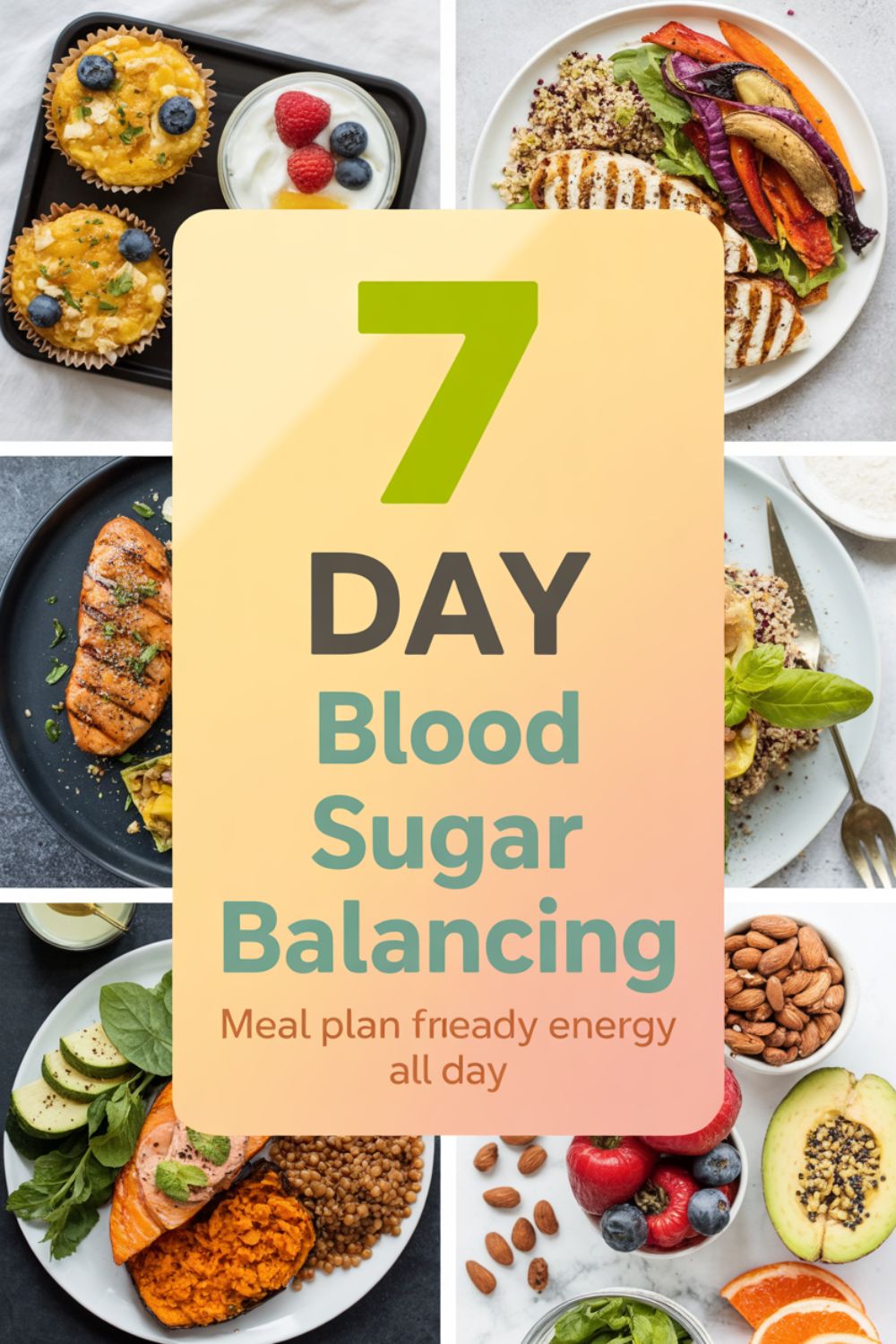
The secret sauce? Combining protein, healthy fats, and fiber-rich carbs in every meal. Research from Mayo Clinic shows that this combination slows down digestion and keeps glucose from flooding your bloodstream all at once.
The Building Blocks of Blood Sugar-Friendly Meals
Non-Starchy Vegetables (Your New Best Friends)
These should take up about half your plate at lunch and dinner. We’re talking leafy greens, broccoli, cauliflower, bell peppers, zucchini, and basically anything that grows above ground and doesn’t taste like candy. They’re loaded with fiber and nutrients but won’t send your glucose levels on a roller coaster ride.
I used to think vegetables were boring until I learned how to actually season them properly. A little high-quality olive oil, some garlic, and the right spices can turn Brussels sprouts from “meh” to “please sir, can I have some more.” Trust me on this.
Quality Proteins (The Anchor of Every Meal)
Protein is essential because it slows down how quickly your body processes carbohydrates. Think chicken, fish, turkey, eggs, Greek yogurt, tofu, tempeh, and legumes. About a quarter of your plate should be dedicated to these guys.
One thing I learned the hard way: not all protein sources are created equal for meal prep. Chicken breast can turn into shoe leather if you overcook it, but thighs? Much more forgiving. I rely on my instant-read meat thermometer to avoid serving my family dried-out disappointment.
If you’re looking for quick protein-packed breakfast ideas, Get Full Recipe for high-protein overnight oats that require zero morning brain power.
Smart Carbohydrates (Yes, You Still Get to Eat Carbs)
Carbs aren’t the enemy—refined, processed carbs are. The key is choosing complex carbohydrates that come with fiber attached. Quinoa, brown rice, sweet potatoes, oats, and legumes are your friends here. They break down slowly and provide sustained energy instead of a quick spike and crash.
When you’re choosing grains, look for options that still have their outer layers intact. The American Diabetes Association recommends focusing on whole grains over refined versions because the fiber content makes a huge difference in how they affect your blood sugar.
Meal Prep Essentials Used in This Plan
- Physical Products:
- 24-piece glass meal prep container set – Seriously, these changed my meal prep game. Microwave-safe, dishwasher-friendly, and they actually seal properly.
- Adjustable mandoline slicer – For when you need uniform veggie cuts but value your fingertips. The hand guard is non-negotiable.
- Digital food scale – Not for obsessing over every gram, but helpful when you’re learning what portion sizes actually look like.
- Digital Resources:
- Blood Sugar Tracking Journal (PDF) – Helps you identify which foods work best for your body.
- Weekly Meal Planning Template Bundle – Takes the guesswork out of grocery shopping.
- Quick Snack Guide for Stable Blood Sugar (eBook) – Because 3 PM cravings are real and you need a plan.
Your 7-Day Blood Sugar Balancing Meal Plan
Alright, here’s the actual plan. I’ve designed this to be realistic—meaning you’re not cooking a five-course meal three times a day. There’s strategic leftovers, simple swaps, and meals that come together quickly. Each day aims for balanced macros and includes plenty of fiber to keep things stable.
Day 1: Setting the Foundation
Breakfast: Veggie-packed omelet with spinach, mushrooms, and tomatoes. Two eggs plus one egg white for extra protein without too much fat. Side of fresh berries.
Lunch: Mediterranean chickpea salad with cucumbers, tomatoes, red onion, feta, and a lemon-herb dressing over mixed greens. Whole grain pita on the side.
Snack: Apple slices with almond butter. The combo of fiber from the apple and fat from the almond butter keeps things balanced.
Dinner: Baked salmon with roasted Brussels sprouts and quinoa. I season the salmon with lemon pepper seasoning blend and it’s chef’s kiss every time.
Speaking of Mediterranean flavors, you might also love this Greek-inspired grain bowl or this herbed chicken with roasted vegetables for similar flavor profiles.
Day 2: Keep the Momentum Going
Breakfast: Greek yogurt parfait with mixed berries, chia seeds, and a sprinkle of granola. Use plain Greek yogurt to avoid hidden sugars.
Lunch: Turkey and avocado wrap using a whole wheat tortilla, loaded with lettuce, tomato, and a smear of hummus. Side of carrot sticks.
Snack: Get Full Recipe for these energy balls that use dates and nuts—naturally sweet but won’t spike your glucose.
Dinner: Stir-fry with chicken breast, broccoli, snap peas, and bell peppers over brown rice. Using a carbon steel wok makes this come together in under 20 minutes.
“I started following this meal plan structure three months ago, and honestly, I can’t believe the difference. No more afternoon crashes, and I’ve lost 12 pounds without feeling like I’m starving myself. My doctor even commented on my improved A1C levels!” – Sarah M. from our community
Day 3: Midweek Magic
Breakfast: Overnight oats made with rolled oats, almond milk, chia seeds, and topped with sliced banana and walnuts. Prep these in small mason jars and grab them on your way out the door.
Lunch: Leftover stir-fry from last night (see how that works?). If you meal prep smart, you’re not cooking from scratch every single meal.
Snack: Celery sticks with peanut butter and a few raisins on top. Don’t knock it until you try it—the combination is weirdly satisfying.
Dinner: Turkey meatballs with zucchini noodles and marinara sauce. Get Full Recipe for meatballs that stay moist and flavorful.
Day 4: Halfway There
Breakfast: Scrambled eggs with diced peppers and onions, side of whole grain toast with mashed avocado. If you want to fancy it up, add everything bagel seasoning.
Lunch: Quinoa bowl with black beans, roasted sweet potato, cherry tomatoes, and lime-cilantro dressing. This is one of those meals that tastes better the second day.
Snack: Hummus with cucumber slices and bell pepper strips. Keep these pre-portioned in snack containers for easy grabbing.
Dinner: Grilled chicken breast with roasted cauliflower and a small baked sweet potato. The sweet potato provides some carbs, but the fiber content keeps the glycemic impact moderate.
Day 5: Friday Feeling
Breakfast: Smoothie with spinach (you won’t taste it, I promise), frozen berries, protein powder, and unsweetened almond milk. Add a tablespoon of ground flaxseed for extra fiber and omega-3s.
Lunch: Tuna salad over mixed greens with cherry tomatoes, cucumbers, and a handful of whole grain crackers. Skip the mayo-heavy version and use Greek yogurt instead.
Snack: A small handful of mixed nuts and a piece of fruit. The key word here is “small handful,” not “I ate the entire Costco-sized container.”
Dinner: Shrimp and vegetable kabobs with a side of wild rice. Get Full Recipe for a marinade that makes these taste restaurant-quality.
For more seafood inspiration, try this garlic butter salmon or these Asian-inspired fish tacos.
Day 6: Weekend Wellness
Breakfast: Whole grain waffles (yes, really) topped with Greek yogurt and fresh strawberries. The protein from the yogurt balances out the carbs from the waffles.
Lunch: Chicken and vegetable soup with a side salad. Soup is underrated for blood sugar management because the liquid slows down digestion.
Snack: Cottage cheese with cherry tomatoes and a drizzle of olive oil. Sounds weird, tastes amazing. Add fresh basil if you’re feeling fancy.
Dinner: Baked cod with roasted asparagus and farro. Farro is an ancient grain that’s chewy, nutty, and keeps you full for hours.
Day 7: Strong Finish
Breakfast: Veggie frittata made in a cast iron skillet. Load it with whatever vegetables you have left from the week—waste not, want not.
Lunch: Buddha bowl with roasted chickpeas, mixed greens, shredded carrots, cucumbers, and tahini dressing. These bowls are infinitely customizable.
Snack: Hard-boiled eggs with a sprinkle of salt and pepper. Meal prep a dozen at the beginning of the week for easy protein hits.
Dinner: Beef and broccoli stir-fry with cauliflower rice. If you’re not into ricing cauliflower yourself, the frozen bags work just fine and save you precious weekend time.
Tools & Resources That Make Cooking Easier
- Kitchen Essentials:
- Instant-read digital thermometer – Stop guessing if your chicken is done. This takes two seconds and prevents both food poisoning and dried-out meat.
- Herb keeper storage containers – Fresh herbs stay fresh for weeks instead of days. Game changer for adding flavor without calories.
- Silicone baking mats – Nothing sticks to these beauties. Use them for roasting vegetables and you’ll never scrub another sheet pan.
- Digital Downloads:
- Printable Blood Sugar-Friendly Snack List – Keep this on your fridge for emergency snack situations.
- 28-Day Meal Rotation Planner – Takes the mental load out of answering “what’s for dinner?”
- Blood Sugar Response Food Journal – Track how different foods affect YOUR body specifically.
Smart Substitutions and Swaps
Real talk: life happens. You’re not going to follow this plan perfectly, and that’s completely fine. The key is understanding the principles so you can make smart swaps on the fly.
When You’re Short on Time
Rotisserie chicken is your friend. It’s already cooked, it’s flavorful, and you can shred it into salads, wraps, or grain bowls in seconds. I keep one in the fridge basically at all times.
Frozen vegetables are not inferior to fresh. In fact, they’re often frozen at peak ripeness, which means they retain more nutrients than fresh veggies that have been sitting in your crisper drawer for a week and a half. Plus, no chopping required.
When You’re Eating Out
Ask for dressings and sauces on the side. Restaurant portions of these are basically sugar bombs in disguise. Use them sparingly and you’ll still get the flavor without the glucose spike.
Choose grilled or baked proteins over fried. If the menu description includes words like “crispy,” “breaded,” or “tempura,” that’s code for “your blood sugar is about to go on an adventure.”
Start with a salad or vegetable-based appetizer. This gives you fiber upfront, which slows down the absorption of whatever else you eat.
Common Mistakes to Avoid
After working with dozens of people trying to balance their blood sugar, I’ve seen the same mistakes pop up repeatedly. Let’s save you some time and frustration.
Skipping Meals
I get it—intermittent fasting is trendy, and sometimes you’re just not hungry. But if you’re prone to blood sugar crashes, skipping meals sets you up for a disaster later. When you finally eat, you’re so ravenous that you’re more likely to overeat and choose quick-digesting carbs.
Instead, eat smaller, balanced meals every 3-4 hours. Your body will thank you with steady energy and fewer cravings.
Not Eating Enough Protein
This is especially common at breakfast. If your morning meal is basically a carb fest—think bagel with jam, sweetened yogurt, or most cereals—you’re setting yourself up for a mid-morning crash. Diabetes research shows that including 20-30 grams of protein at breakfast significantly improves blood sugar control throughout the day.
Drinking Your Calories
Juice, smoothies, and fancy coffee drinks can contain more sugar than a candy bar. Even “healthy” green juices are problematic because they’re missing the fiber that slows down sugar absorption. When you remove the fiber and just drink the juice, your body treats it like straight sugar.
Stick to water, unsweetened tea, coffee without the sugar parade, or sparkling water if you want something fizzy. If you absolutely need flavor, add fresh lemon, lime, or cucumber slices.
Troubleshooting Your Blood Sugar Balance
What If You’re Still Experiencing Crashes?
First, make sure you’re actually eating enough. I’ve seen people try to balance their blood sugar while also severely restricting calories, and it’s a recipe for disaster. Your body needs fuel to function.
Second, pay attention to your carb-to-protein ratios. Some people are more sensitive to carbohydrates than others. If you’re still experiencing issues, try reducing your carb portions slightly and increasing protein and healthy fats.
Finally, consider getting a continuous glucose monitor or at least checking your blood sugar at home. This gives you real data about how YOUR body responds to different foods. What works for me might not work for you, and vice versa.
What About Exercise?
Movement helps regulate blood sugar by improving insulin sensitivity. You don’t need to become a gym rat, but incorporating regular activity makes a big difference. A 15-20 minute walk after meals can significantly improve glucose control.
Just be aware that intense exercise can sometimes cause a temporary blood sugar spike (thanks, stress hormones), followed by a drop later. Have a small protein-based snack ready for post-workout if needed.
Frequently Asked Questions
Can I eat fruit if I’m trying to balance my blood sugar?
Absolutely. Fruit contains natural sugars, but it also comes packaged with fiber, which slows down digestion. The key is pairing fruit with protein or healthy fat—like apple slices with almond butter or berries with Greek yogurt. This combination prevents rapid spikes and keeps you satisfied longer.
How long does it take to see results from blood sugar-balancing meals?
Most people notice improved energy levels within 3-5 days of consistent eating. However, measurable changes in blood sugar markers (like A1C levels) typically take 2-3 months. The immediate benefit is usually feeling less hangry, having better focus, and experiencing fewer energy crashes throughout the day.
Do I need to count calories on this meal plan?
Not necessarily. The focus here is on food quality and macronutrient balance rather than strict calorie counting. When you eat adequate protein, healthy fats, and fiber-rich carbs, your appetite naturally regulates itself. That said, portion sizes still matter—use your hand as a guide: palm-sized protein, fist-sized carbs, and thumb-sized fats.
What if I’m vegetarian or vegan?
This meal plan absolutely works for plant-based eaters. Simply swap animal proteins for plant-based options like tofu, tempeh, legumes, and seitan. The principles remain the same: combine protein, healthy fats, and fiber-rich carbs at every meal. Just pay extra attention to getting enough protein, as plant sources are often lower in protein by volume.
Can I drink coffee on this plan?
Yes, but skip the sugar-laden coffee drinks. Black coffee or coffee with a splash of unsweetened milk is fine. If you need sweetness, try a small amount of stevia or monk fruit sweetener. Avoid drinking coffee on an empty stomach, as it can cause blood sugar fluctuations in some people—pair it with a protein-rich breakfast instead.
The Bottom Line
Balancing your blood sugar isn’t about perfection or following some impossible diet that makes you miserable. It’s about understanding how different foods affect your body and making choices that support steady energy throughout the day.
This 7-day meal plan gives you a framework, but feel free to adapt it based on your preferences, schedule, and what’s available in your kitchen. The core principles—combining protein with carbs, loading up on non-starchy vegetables, choosing whole grains over refined ones, and eating at regular intervals—apply regardless of which specific foods you choose.
Start with what feels manageable. Maybe you nail breakfast and lunch but dinner is chaos for a while. That’s fine. Progress over perfection, always. Your body doesn’t need a perfect week; it needs consistent, mostly good choices over time.
And honestly? Once you get used to eating this way, you probably won’t want to go back. The difference in how you feel—the sustained energy, the mental clarity, the absence of that 3 PM “I need sugar NOW” desperation—makes it worth the initial adjustment period. Give it a solid week and see how you feel. I’m betting you’ll notice a difference.