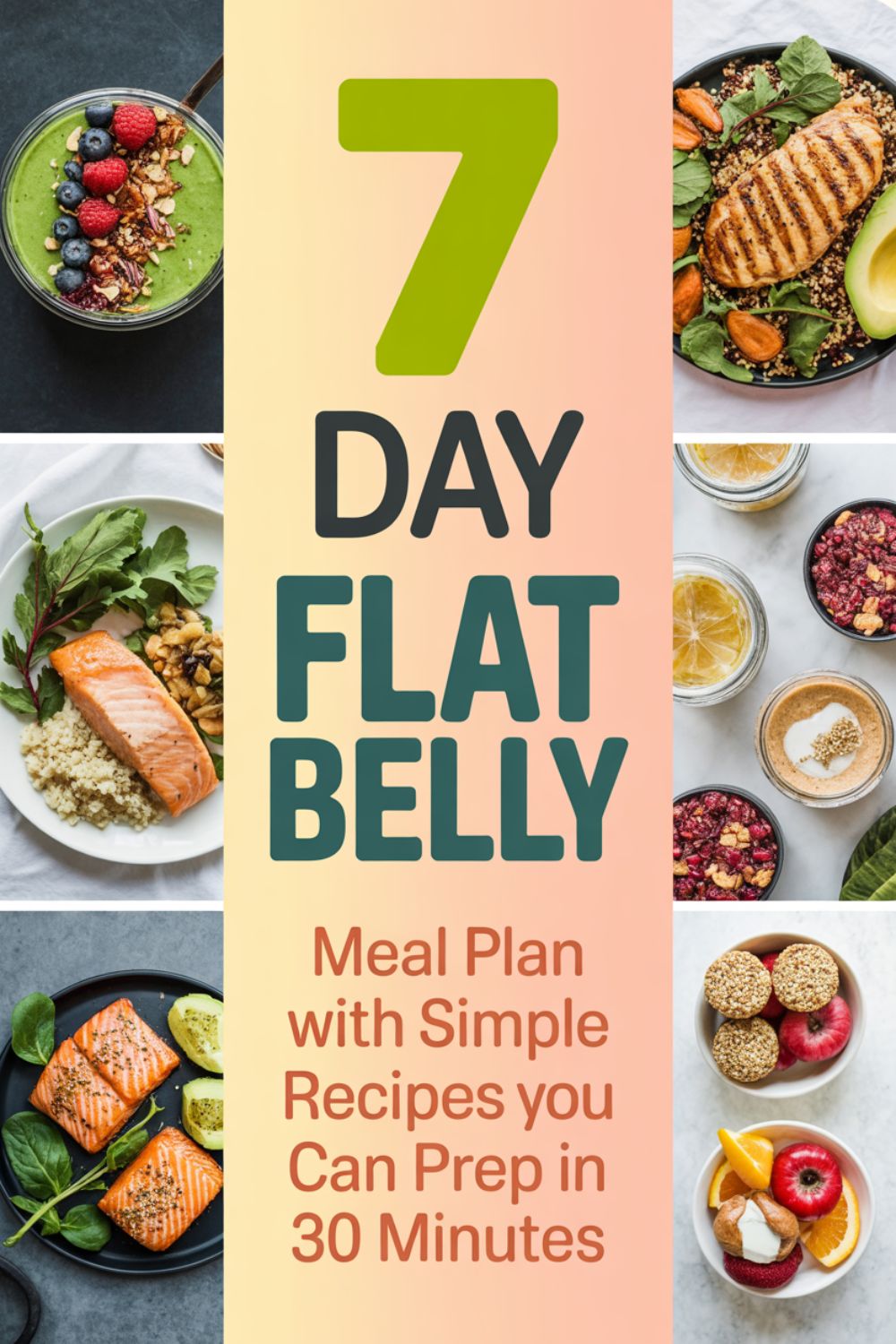
7-Day Flat Belly Meal Plan with Simple Recipes You Can Prep in 30 Minutes
I’ve spent the last few years figuring out what actually works when it comes to reducing bloat, supporting digestion, and feeling lighter without the drama. This plan isn’t about restriction or some miracle detox water—it’s about real food that takes 30 minutes or less to prep, tastes good enough that you’ll actually eat it, and won’t leave you raiding the pantry at 10 PM.
What makes this different from every other meal plan out there? Simple. Every recipe is designed with bloat-fighting ingredients, balanced macros, and zero nonsense. No specialty gadgets required, no obscure superfoods, and definitely no sad desk salads. Just seven days of meals that work with your life, not against it.
Why Your Current Meal Prep Strategy Isn’t Working
Ever notice how you start the week all motivated, containers neatly stacked in the fridge, and by Thursday you’re ordering pizza because reheating day-old grilled chicken sounds about as appealing as doing your taxes? That’s because most meal plans ignore the reality of how we actually eat.
The problem isn’t your willpower—it’s that complicated recipes with seventeen steps don’t survive contact with real life. When you’re hungry and tired, you need food that’s ready in minutes, not a cooking show production. Plus, if it doesn’t taste good cold or reheated, you’re not eating it. Period.
According to Mayo Clinic’s nutrition experts, successful meal planning comes down to simplicity and balance—not perfection. Their research shows that people who focus on nutrient-dense whole foods and realistic portion sizes see better long-term results than those following restrictive diets.
The Science Behind Flat Belly Foods (Without the Boring Lecture)
Here’s what actually matters when it comes to reducing belly bloat and supporting a leaner midsection. First up: fiber. Not the chalky supplement kind—real fiber from vegetables, fruits, and whole grains that keeps your digestive system running smoothly. Think of it as internal housekeeping that prevents that puffy, uncomfortable feeling.
Then there’s protein, which does double duty by keeping you full longer and supporting muscle maintenance. When you’re eating enough protein spread throughout the day, you’re way less likely to faceplant into a bag of chips at 3 PM. Research shows that balanced macronutrient distribution plays a crucial role in sustainable weight management and reducing visceral belly fat.
And those healthy fats everyone keeps talking about? They’re not just trendy—monounsaturated fats from sources like avocado, olive oil, and nuts actually help reduce inflammation and keep you satisfied. The key is using them strategically, not drowning everything in oil because you read somewhere that fat is “good for you.”
Water intake matters too, but you don’t need some Instagram-famous infused water recipe. Just drink when you’re thirsty, maybe aim for a bit more than usual, and your body will sort itself out. Honestly, staying hydrated is one of those things we overcomplicate when the solution is literally just… drinking water.
What You’ll Actually Be Eating This Week
Before we dive into the daily breakdown, let’s talk about what’s on the menu. This plan rotates around ingredients that work hard for you: leafy greens that don’t wilt after one day, proteins that reheat well, and carbs that actually give you energy instead of making you crash two hours later.
You’ll be eating real meals—think Mediterranean-inspired bowls, quick stir-fries, sheet pan dinners, and breakfast options that don’t require waking up at 5 AM. Everything is designed to taste good at room temperature or reheated, because let’s be honest, that’s how most of us eat our meal prep anyway.
The recipes use overlapping ingredients so you’re not buying seventeen different spices you’ll use once and then forget about. If you’re buying spinach on Sunday, you’re using it in at least three different meals. Same goes for chicken, quinoa, and cherry tomatoes. Waste less, stress less, eat better.
Meal Prep Essentials Used in This Plan
Look, I’m not about to send you on a wild goose chase for specialty equipment, but these few things genuinely make the process smoother. Think of them as the difference between meal prep feeling like a chore and actually being manageable.
- Glass meal prep containers with compartments – I can’t stress this enough. The divided ones keep your food from turning into a sad, mixed-together mess. Plus, glass doesn’t stain or hold smells like plastic does.
- Microplane grater – For zesting citrus and grating garlic in seconds. Way faster than mincing, and it distributes the flavor more evenly. Total game-changer for quick marinades.
- Silicone baking mats – Zero sticking, zero scrubbing. I use these on everything short of cereal bowls. Sheet pan dinners become actually easy instead of a cleanup nightmare.
- 7-Day Meal Prep Digital Guide – Complete shopping lists, prep schedules, and portion guides. Takes the guesswork out entirely.
- Flat Belly Recipe Collection eBook – 50+ recipes beyond this plan, all with the same 30-minute philosophy and bloat-fighting focus.
- Kitchen Timer & Portion Guide PDF – Helps you nail timing and portions without overthinking it.
- Join our WhatsApp Meal Prep Community – Real people sharing their weekly preps, recipe swaps, and honest reviews. Way more useful than any influencer’s highlight reel.
Your 7-Day Flat Belly Meal Plan
Alright, here’s where we get into the actual meals. Each day is structured around three main meals plus a snack option, totaling around 1,500-1,600 calories. If you need more (or less), adjust portions accordingly—this isn’t a prison sentence, it’s a framework.
Day 1: Monday – The Fresh Start
For more morning inspiration, you might love these high-protein breakfast bowls or this Mediterranean smoothie bowl—both come together in under 10 minutes and keep you full until lunch.
Day 2: Tuesday – The Midweek Momentum
Day 3: Wednesday – Halfway There
If shrimp isn’t your thing, try these easy chicken stir-fry recipes or this tofu and vegetable stir-fry—same method, different protein, equally quick.
Day 4: Thursday – Keep Going
Day 5: Friday – Almost Weekend
Speaking of quinoa, check out these creative quinoa bowl recipes if you’re tired of the same old preparation. There’s also this Mediterranean grain bowl that uses the same base but completely different flavor profile.
Day 6: Saturday – Weekend Vibes
Day 7: Sunday – Meal Prep Day
The Ingredients That Do the Heavy Lifting
Notice how certain ingredients keep showing up? That’s intentional. Leafy greens like spinach and kale are bloat-fighters loaded with fiber and water content. They also happen to be ridiculously versatile—toss them in eggs, blend them in smoothies, use them as salad bases, or sauté them as a side.
Lean proteins (chicken, fish, turkey, Greek yogurt) keep you full and support muscle maintenance while you’re in a calorie deficit. The myth that protein is only for bodybuilders needs to die—everyone needs adequate protein to feel satisfied and maintain energy throughout the day.
Whole grains like quinoa, brown rice, and oats provide sustained energy without the blood sugar spike-and-crash of refined carbs. They’re also more filling, which means you’re less likely to be hunting for snacks an hour after eating. And honestly, they taste better too—once you get used to real grains, the white bread stuff tastes like cardboard anyway.
Healthy fats from avocado, nuts, olive oil, and fatty fish like salmon aren’t just trendy—they’re essential for hormone production, nutrient absorption, and keeping your skin from looking like the Sahara Desert. Just watch your portions because fat is calorie-dense, and those calories add up fast. A tablespoon of olive oil is great; pouring it like you’re at a restaurant is not.
Tools & Resources That Make Cooking Easier
You don’t need a professional kitchen to pull this off, but a few smart tools can cut your prep time in half. Here’s what actually earns its place on my counter.
- Instant-read thermometer – Stop guessing if your chicken is done. Insert, read, know for sure. No more dry, overcooked protein because you were paranoid about food safety.
- Salad spinner – Sounds unnecessary until you try eating wet lettuce. This thing pays for itself in non-soggy salads alone.
- Citrus juicer – Fresh lemon and lime juice make everything taste better. Those squeeze bottles from the store? Not even close. Get the handheld kind that catches the seeds.
- Macro Tracking Simplified Guide – If you want to understand portions without becoming obsessive about it, this breaks it down in plain English.
- 30-Minute Meals eBook Collection – More recipes following the same quick-prep philosophy. Great for when you’re bored of this week’s rotation.
- Portion Control Visual Guide – Learn what proper portions look like using your hand—no scale required when you’re out and about.
- Join our Recipe Testing Group on WhatsApp – Members share their variations, substitutions, and honest feedback. It’s like having a test kitchen of normal people instead of food stylists.
What About Dining Out or Social Events?
Let’s address the elephant in the room—you’re probably going to eat something not on this plan at some point this week. Maybe it’s your friend’s birthday dinner, maybe you just really want pizza on Friday night. Here’s the deal: one meal isn’t going to derail everything unless you let it turn into a week-long free-for-all.
If you know you’ve got a dinner out, stick to the plan earlier in the day and make reasonable choices at the restaurant. Order the grilled fish instead of the fried version. Get the salad dressing on the side. Share the dessert. You know the drill—you don’t need me to lecture you on basic restaurant navigation.
The goal isn’t perfection; it’s consistency. Seven days of this plan will help reduce bloating and reset your eating habits. But if you slip up or need to adjust? Just pick up where you left off. The all-or-nothing mentality is what actually sabotages people, not the occasional slice of pizza.
Common Mistakes That Sabotage Results
First major mistake? Not drinking enough water. Everyone says it, nobody does it consistently. But here’s the thing—when you’re eating more fiber (which you are on this plan), you need adequate water or you’re just going to be bloated and uncomfortable. Keep a water bottle on your desk, drink a glass with each meal, done.
Second mistake: skipping meals or cutting portions too small because you think faster is better. Nope. When you’re too hungry, you make terrible decisions—usually involving whatever’s fastest and least healthy. Eat the portions outlined in the plan. They’re designed to keep you satisfied while still creating a calorie deficit for fat loss.
Third mistake: not prepping anything in advance and then acting surprised when you don’t stick to it. Look, I get that meal prep sounds boring, but so is ordering takeout every night and wondering why your jeans don’t fit. Pick your hard: spending an hour on Sunday prepping, or spending all week feeling frustrated about your food choices.
And the big one: weighing yourself daily and freaking out over normal fluctuations. Your weight can vary by 2-5 pounds throughout the week depending on water retention, stress, hormones, and how much salt you ate yesterday. If you must weigh yourself, pick one day per week, same time, same conditions. Better yet, focus on how your clothes fit and how you feel.
Making This Plan Work for Your Life
Here’s the reality: this plan only works if you actually do it. Groundbreaking, I know. But seriously—the fanciest meal plan in the world is useless if it doesn’t fit your schedule, your budget, or your taste preferences. So let’s talk about making this sustainable.
Don’t like salmon? Swap it for chicken or turkey. Hate quinoa? Use brown rice. Allergic to almonds? Try sunflower seed butter. The specific ingredients matter less than the overall structure: lean protein, complex carbs, healthy fats, lots of vegetables. As long as you’re hitting those categories, you’re good.
If 30 minutes still feels too long, simplify even further. Buy pre-washed greens. Get rotisserie chicken from the grocery store. Use frozen vegetables. Nobody’s giving out awards for making everything from scratch—they’re giving out results for consistency. Use whatever shortcuts keep you on track.
And if you mess up a day? Just move on. Don’t skip the next meal to “make up for it,” don’t throw the rest of the week away because Monday wasn’t perfect, don’t beat yourself up like you committed some cardinal sin. You ate something unplanned, noted it, and moved forward. That’s called being a normal human.
Looking for even more variety? Try these easy sheet pan dinners or this collection of make-ahead breakfast options—all follow the same 30-minute prep philosophy and focus on real, whole ingredients.
Frequently Asked Questions
Can I follow this plan if I’m vegetarian or vegan?
Absolutely. Swap the animal proteins for plant-based options like tofu, tempeh, legumes, and seitan. The structure stays the same—you’re just changing the protein source. Greek yogurt becomes plant-based yogurt, chicken becomes chickpeas or lentils, fish becomes marinated tofu. The principles of balanced macros and quick prep still apply.
Will I actually lose belly fat in just 7 days?
Let’s be real—you’re not going to lose 10 pounds of actual fat in a week, and anyone promising that is lying to you. What you will notice is reduced bloating, better digestion, and feeling lighter overall. Some of that initial “weight loss” is water weight and reduced inflammation, which is still a win. For actual fat loss, you’ll need to stick with it consistently for several weeks.
Do I need to count calories on this plan?
Not necessarily. The portions are designed to put you in a reasonable calorie deficit without needing to track every gram. If you’re someone who likes tracking for accountability, go for it—most of these meals clock in around 400-500 calories each. But if counting calories makes you miserable, just follow the portions as outlined and trust the process.
What if I don’t like meal prepping?
Then don’t do it. Cook fresh each day if that’s your preference—these recipes are quick enough that cooking the same evening is totally doable. The meal prep suggestions are for convenience, not a requirement. Some people love spending Sunday afternoon in the kitchen; others would rather cook as they go. Do what works for you.
Can I drink coffee or alcohol on this plan?
Coffee is fine—black, with a splash of milk, however you normally take it. Just watch the sugar and flavored syrups. As for alcohol, it’s not included in the plan because it tends to increase bloating and isn’t great for fat loss, but one glass of wine with dinner isn’t going to destroy your progress. Just be honest about whether “one glass” stays one glass or turns into three.
Final Thoughts on Actually Making This Happen
Look, at the end of the day, this meal plan is only as good as your commitment to following it. Not perfectly—nobody’s asking for perfection. But consistently enough that it becomes your default instead of just something you tried that one time.
The reason this works when other plans don’t is simple: it’s realistic. You’re not eating foods that require a culinary degree to prepare. You’re not spending money on ingredients you’ll never use again. You’re not spending hours in the kitchen when you’d rather be doing literally anything else. It’s just real food, cooked simply, eaten consistently.
Start with this week. See how you feel on Sunday evening. Notice whether you have more energy, less bloating, better focus. Check whether your clothes fit a bit more comfortably. Those small wins are what keep you going—not some dramatic before-and-after transformation that took months and professional photography to achieve.
And if you find yourself struggling or needing more support, that’s normal. Nobody changes their entire relationship with food overnight. The WhatsApp communities I mentioned earlier? They’re full of people figuring this out in real-time, sharing what works and what doesn’t, and keeping each other accountable without the judgment.
The bottom line is this: you can spend another week thinking about getting healthier, or you can spend it actually doing it. Pick one recipe from this plan tonight. Cook it. See how it goes. Build from there. Progress doesn’t require perfection—it just requires starting.