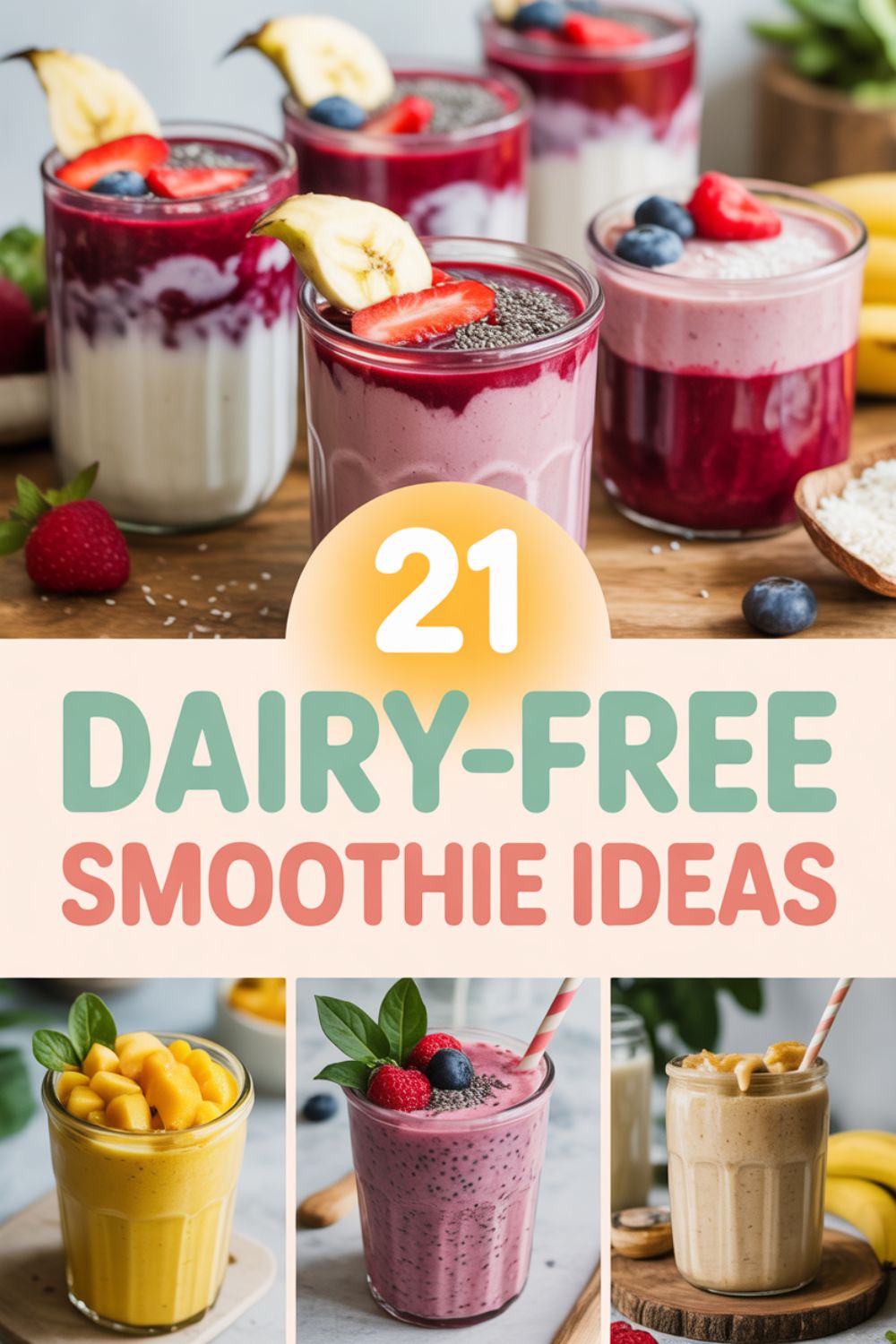
21 Dairy-Free Smoothie Ideas That Actually Taste Amazing
No yogurt, no cow’s milk, no compromise on flavor. Just 21 plant-based blends worth waking up for.
Here is an honest confession: I spent three years thinking dairy-free smoothies were just sad fruit juice in disguise. Watery, thin, weirdly sweet, and gone from your stomach by 9 a.m. Then I actually learned how to build them properly, and now I am someone who gets unreasonably excited about almond milk and frozen mango on a Tuesday.
Whether you are lactose intolerant, vegan, cutting calories, or simply curious about what oat milk can do to a berry blend, these 21 dairy-free smoothie ideas are here to replace every mediocre breakfast you have ever blended. No protein powder required, no specialty health food store run needed. Just real ingredients, real flavor, and a blender you probably already own.
These ideas pull from plant-based bases like oat milk, almond milk, coconut milk, and cashew milk — each one bringing a different texture and nutritional profile to your glass. The goal is always the same: creamy, satisfying, and worth making again. Let’s get into it.
Why Dairy-Free Smoothies Deserve More Credit
The biggest myth about dairy-free smoothies is that they cannot be creamy. This one is simply wrong. Frozen banana, ripe avocado, full-fat coconut milk, soaked cashews — all of these create a texture so thick and velvety that you will forget dairy was ever involved. IMO, a well-made dairy-free smoothie is actually more interesting than its dairy counterpart because you have to think about what you are building.
There is also the digestion argument. According to Healthline’s review of plant-based milks, oat milk contains soluble fiber that slows digestion and helps stabilize blood sugar levels — which is something your standard cow’s milk cannot claim. If you have ever felt bloated after a yogurt-based smoothie, swapping to a plant base is worth trying for at least a week.
Beyond texture and digestion, plant-based bases bring their own nutritional stories. Soy milk sits closest to cow’s milk in protein content. Coconut milk adds medium-chain triglycerides that your body burns quickly for energy. Hemp milk delivers omega-3 fatty acids. Each base is a different ingredient, not just a substitute. Once you start thinking about them that way, the whole process gets a lot more fun.
Choosing Your Plant-Based Base: A Quick Guide
Before we get to the actual recipes, let’s talk bases. The liquid you choose will change everything about how your smoothie feels, tastes, and fills you up. This is the decision most people rush past, and it is the one that matters most.
Almond Milk
Light, slightly nutty, and low in calories. Unsweetened almond milk runs around 30-40 calories per cup, which makes it the go-to base if you want to keep things lean without sacrificing creaminess. It does not have much protein on its own, so pair it with hemp seeds or nut butter if you want your smoothie to hold you past 10 a.m. The Elmhurst 1925 Unsweetened Almond Milk is made with just two ingredients and blends beautifully.
Oat Milk
Creamier, slightly sweet, and genuinely excellent in anything with chocolate or cinnamon. Oat milk has more carbohydrates than other plant milks, which makes it a solid energy source before a workout. It also froths and blends more smoothly than most other options. If you have not tried the Oatly Barista Edition in a smoothie, you are missing something genuinely good.
Coconut Milk
Rich, tropical, and unapologetically indulgent. The full-fat canned version is a completely different product from the carton variety — thick enough to make smoothies that feel almost like ice cream. Save the canned version for when you want something truly decadent. For everyday use, the lighter carton coconut milk works perfectly. Great in mango, pineapple, or chocolate-based blends.
Cashew and Soy Milk
Cashew milk has a creamy, mildly sweet flavour that works beautifully in vanilla-based recipes. According to nutrition research, soy milk contains around 7-8 grams of protein per cup — the closest any plant milk gets to cow’s milk. If protein is your goal, soy is your best friend in a smoothie.
Freeze your plant milk in ice cube trays. Add 4-6 cubes instead of regular ice and your smoothie stays thick and cold without getting watered down as it melts.
21 Dairy-Free Smoothie Ideas Worth Blending
1. Classic Almond Butter Banana
Frozen banana, two tablespoons of almond butter, a cup of unsweetened almond milk, a pinch of cinnamon, and a small scoop of oats for staying power. This is the smoothie equivalent of a warm hug at 7 a.m. Blend frozen banana last for the creamiest texture. Artisana Organics Raw Almond Butter — the no-stir kind — is what I keep on the counter specifically for this. Get Full Recipe
2. Mango Turmeric Sunshine
Frozen mango, a half-inch knob of fresh ginger, a quarter teaspoon of turmeric, coconut milk, and a squeeze of orange juice. Bright, anti-inflammatory, and genuinely stunning in a glass. The ginger gives it just enough bite to feel like it is doing something useful for your body — because it is.
3. Triple Berry Oat Milk Blend
Frozen strawberries, blueberries, raspberries, oat milk, a tablespoon of chia seeds, and a drizzle of maple syrup. Simple, classic, and deeply satisfying. Chia seeds thicken it up as it sits, so drink this one within ten minutes of blending or it will start eating itself. Get Full Recipe
4. Peanut Butter Chocolate Dream
Frozen banana, two tablespoons of natural peanut butter, one tablespoon of cocoa powder, oat milk, and a date or two for sweetness. This tastes like dessert at breakfast, and I am not even slightly sorry about it. Add a tablespoon of hemp seeds and you suddenly have a complete macro profile without a single scoop of powder.
5. Avocado Green Goddess
Half an avocado, a large handful of baby spinach, frozen pineapple, coconut water, lime juice, and a few mint leaves. The avocado replaces any need for dairy — it creates a texture so smooth it feels almost illegal. The spinach is completely invisible behind the pineapple flavor. Trust the process here.
6. Strawberry Coconut Cream
Frozen strawberries, full-fat coconut milk, vanilla extract, a tablespoon of maple syrup, and a pinch of sea salt. The salt is non-negotiable. It makes the strawberry flavor pop in a way that will confuse and delight you. Get Full Recipe
7. Blueberry Lavender Calm
Frozen blueberries, a quarter teaspoon of culinary-grade lavender (or lavender extract), oat milk, a banana, and a tablespoon of cashew butter. This one sounds fancier than it is. It blends up a gorgeous deep purple and has a subtly floral quality that makes it feel like something you ordered at an expensive cafe.
8. Peach Ginger Zing
Frozen peaches, fresh ginger, almond milk, a tablespoon of flax seeds, and a drizzle of honey (or agave if you prefer fully vegan). Peach season or not, frozen peaches work beautifully here. Flax seeds add an omega-3 boost that you will never actually taste.
9. Chocolate Cherry Recovery
Frozen tart cherries, one tablespoon of cocoa powder, soy milk, a tablespoon of almond butter, and a banana. Tart cherries contain natural compounds linked to reduced muscle soreness, which makes this a genuinely solid post-workout smoothie. It also tastes like a Black Forest cake, which is reason enough on its own.
10. Tropical Gut Reset
Frozen pineapple, frozen papaya, coconut milk, a tablespoon of chia seeds, and a squeeze of lime. Pineapple contains bromelain, and papaya contains papain — two natural digestive enzymes that do actual work. This is one of those rare smoothies that tastes like a vacation and also happens to be genuinely functional.
11. Matcha Almond Wake-Up
One teaspoon of ceremonial-grade matcha, frozen banana, almond milk, a tablespoon of almond butter, and a drizzle of honey. Matcha provides a slow, calm caffeine release that is noticeably different from coffee. Use cold liquid when blending matcha — hot liquid can turn it bitter and the green color muddy. The Ippodo Matcha Powder is my personal go-to for smoothies because it dissolves evenly and never tastes grassy.
12. Golden Milk Smoothie
Frozen banana, turmeric, cinnamon, a pinch of black pepper, oat milk, a tablespoon of coconut oil, and ginger. Black pepper is not optional — it activates the curcumin in turmeric and dramatically increases absorption. This is one of those times where a small detail actually matters, scientifically.
“I started making the golden milk smoothie every morning for three weeks and my afternoon energy crashes basically stopped. I genuinely did not expect that from a breakfast drink.” — Maria from our reader community, who also tried the anti-inflammatory meal plan alongside it.
13. Watermelon Mint Cooler
Fresh or frozen watermelon, a handful of mint, coconut water, a squeeze of lime, and a handful of baby spinach. This is your hot weather smoothie. Light, hydrating, and refreshing in a way that most smoothies are not. The coconut water gives it natural electrolytes so it doubles as post-workout hydration.
14. Pineapple Spinach Power
Frozen pineapple, two large handfuls of spinach, coconut milk, a banana, and a tablespoon of hemp seeds. The pineapple is so assertive in flavor that the spinach essentially disappears. Hemp seeds add protein and omega-3s without changing the taste at all. This is one of the best ways to sneak greens into someone who claims to hate them.
15. Raspberry Rose Lychee
Frozen raspberries, canned lychees in juice, a small splash of rose water, almond milk, and a banana. This sounds complicated and takes four minutes. The rose water should be treated like hot sauce — a little goes a long way. Start with a quarter teaspoon and adjust. The result is floral, fruity, and genuinely unlike anything else on this list.
16. Sweet Potato Cinnamon Spice
Half a cup of cooked and cooled sweet potato, frozen banana, almond milk, cinnamon, nutmeg, and a tablespoon of pecan butter. This one is cozy, autumnal, and wildly underrated. Sweet potato blends into smoothies so smoothly it is almost alarming. It adds fiber, beta-carotene, and a natural sweetness that means you need almost no added sugar. Get Full Recipe
17. Cucumber Celery Refresh
Fresh cucumber, two celery stalks, frozen apple chunks, spinach, coconut water, lemon juice, and a small knob of ginger. This is the green smoothie for people who say they do not like green smoothies. It is cool, clean, and actually refreshing rather than earthy and dense. FYI, peel the cucumber if it is waxed — the wax can make the blend slightly bitter.
18. Maca Mocha Morning
Frozen banana, one tablespoon of cocoa powder, one teaspoon of maca powder, a shot of cold espresso, oat milk, and a tablespoon of cashew butter. Maca has a malty, caramel-like flavor that plays beautifully with coffee. The Navitas Organics Maca Powder is the one I come back to — it mixes cleanly and does not have that dusty, raw flavor some maca powders carry.
19. Blackberry Basil Burst
Frozen blackberries, a handful of fresh basil, frozen banana, cashew milk, and a squeeze of lemon. Basil in a smoothie sounds like a dare. It is not. The herb adds a fresh, slightly peppery dimension that transforms what would otherwise be a standard berry blend into something genuinely interesting. Use sweet basil, not Thai basil.
20. Banana Oat Meal Prep Smoothie
Frozen banana, a quarter cup of rolled oats, two tablespoons of peanut butter, oat milk, cinnamon, and a tablespoon of ground flax. This one is specifically designed to be prepped in batches. Blend in bulk, pour into mason jars, freeze, and move them to the fridge the night before. By morning, you have a ready-to-shake, genuinely filling breakfast that requires zero thought before 8 a.m. The Weck 742 Tulip Jar Set is my favorite for storage — wide mouth, no leaks, and looks good enough to leave on the counter.
21. Papaya Lime Probiotic Boost
Fresh papaya, frozen mango, coconut water, lime juice, and two tablespoons of coconut yogurt (dairy-free). The coconut yogurt adds a probiotic element without any dairy. Papaya’s natural digestive enzymes combined with live cultures from the yogurt makes this the smoothie to reach for when your gut has had a rough week.
Prep smoothie bags every Sunday: portion your frozen fruit, seeds, and dry add-ins into individual zip-lock bags. In the morning, tip one bag into the blender, add liquid, and blend. Breakfast is done in 90 seconds.
Smoothie Prep Essentials Used in This Guide
A few things that genuinely make the process easier — shared the same way a friend would tell you about them, not the way a catalog would.
Physical Essentials
- Vitamix A2500 Ascent Series Blender — handles frozen fruit, ice, whole seeds, and fibrous greens without complaint. The noise is worth it.
- Weck 742 Tulip Jar Set (6-pack) — wide-mouth glass jars that work perfectly for prepped smoothie storage and do not retain smells like plastic does.
- OXO Good Grips Silicone Reusable Bags (Large) — freeze your prepped smoothie bags in these and they actually seal properly. Game-changer for Sunday prep.
Digital Resources
- 7-Day Anti-Inflammatory Meal Plan — pairs perfectly with a daily anti-inflammatory smoothie. Start here if bloating is your goal to tackle.
- 21-Day Gut Healing Meal Plan — a full structured plan to pair with your digestion-focused smoothies like the Tropical Gut Reset or Papaya Lime above.
- The Complete Guide to Blending Better Health — if you want to go deeper on technique, bases, and nutritional building blocks for smoothies.
How to Build a Dairy-Free Smoothie That Actually Keeps You Full
The number one reason dairy-free smoothies get a bad reputation is that people build them like fruit juice — just fruit and liquid, blended and done. That is not a meal. That is a snack that will have you raiding the office kitchen by 10:30. A filling smoothie needs four components: a liquid base, a source of healthy fat, a source of protein, and your main flavor ingredients.
Fat and protein are what slow digestion and keep you satisfied. Think nut butters, hemp seeds, chia seeds, flax seeds, silken tofu, or high-protein plant milks like soy or pea. Any of these additions can take a smoothie from a quick sugar hit to something that genuinely carries you to lunch. Nut butter versus seed butter is worth considering here too — almond butter has a slightly more refined flavor, while sunflower seed butter works if you need to avoid tree nuts entirely and holds up surprisingly well in chocolate-based blends.
Fiber is your other secret weapon. Oats, chia seeds, ground flaxseed, and even leafy greens contribute fiber that slows the absorption of natural fruit sugars. This matters a lot if blood sugar stability is something you think about. For a more detailed look at how food choices affect energy levels throughout the day, the 7-day blood sugar balancing meal plan is a genuinely useful companion read.
Add a handful of rolled oats to any fruit-heavy smoothie to double the fiber and dramatically improve staying power — you will not taste them once blended, but your stomach will notice the difference by mid-morning.
The Freezer Setup That Makes This All Easy
Here is the honest truth about sustainable smoothie habits: they survive or die based on whether you made prep easy for yourself in advance. A blender on the counter and a stocked freezer will get you a smoothie every morning. A blender in a cabinet and fresh fruit that needs washing and cutting will get you maybe three days before cereal wins again.
The system that actually works is batch-freezing fruit every weekend. Buy in season, chop, spread on a sheet lined with the Reynolds Kitchens Parchment Paper Roll, freeze for two hours, then transfer to labeled bags. Bananas, mangoes, berries, peaches, pineapple — all freeze beautifully and are ready to blend straight from frozen. No thawing, no prep, no excuses.
While you are at it, pre-portion your smoothie add-ins into small glass containers: a week’s worth of chia seeds, hemp hearts, or pre-measured nut butter. It sounds fiddly but takes about fifteen minutes on Sunday and saves you ten minutes every single morning. This is the approach behind every good meal prep system, and it works exactly the same for smoothies.
“I started batch-freezing my smoothie bags after trying the 21-Day Flat Belly Plan and it is honestly the only reason I still make smoothies every morning three months later. The prep removes the decision entirely.” — Keisha, who combined the freezer prep habit with the 21-day flat belly reset plan.
Tools & Resources That Make Smoothie Life Easier
These are things I genuinely use and would tell a friend about without being asked. No fluff, no padding.
Tools Worth Having
- Ninja Nutri Pro Personal Blender — for single-serve smoothies, this is the blender I recommend to anyone who does not want to wash a full-sized pitcher every morning. Fast, powerful, and easy to clean.
- OXO SteeL Mixing Bowls with Lids (3-Piece) — for prepping, storing, and marinating smoothie mix-ins in the fridge. The lids actually fit.
- Ball Wide-Mouth Mason Jars (32 oz, 12-Pack) — for meal-prepped smoothies, batch-frozen portions, and storing nut butter that you make at home. These jars are genuinely one of the most useful things in my kitchen.
Digital Resources
- 25 Smoothies with Hidden Veggies You Can’t Taste — for sneaking nutrition into kids or anyone who is skeptical about green blends.
- 20 Smoothies for Digestion and Gut Reset — a companion collection specifically built around gut health ingredients.
- 21 Smoothies Without Protein Powder — because not everyone wants to use supplements, and you genuinely do not need them.
Dairy-Free Smoothies and the Bigger Picture
Smoothies sit at the intersection of convenience and nutrition in a way that almost nothing else in your kitchen does. When you build them thoughtfully, they become a reliable vehicle for getting in leafy greens, omega-3s, fiber, and antioxidants before most people have finished their first cup of coffee.
The dairy-free angle matters beyond personal preference. Research published in the journal Advances in Nutrition notes that plant-based milks generally offer significantly fewer calories than whole dairy milk while, when fortified, providing comparable calcium content. For people focused on weight management or reducing saturated fat intake, switching from dairy to a plant-based base in daily smoothies adds up meaningfully over time.
None of this means dairy is the enemy. It means options exist, and those options have genuine nutritional merit. The twenty-one recipes in this article were designed to stand completely on their own — not as substitutes for something better, but as things worth making because they taste good and do good. That is the bar that matters.
Frequently Asked Questions
What is the best dairy-free milk for smoothies?
It depends on what you are making. Oat milk is the creamiest and works best in chocolate, banana, and spiced blends. Almond milk is lightest in calories and suits berry or fruit-forward smoothies. Coconut milk (full-fat) is best for tropical or dessert-style blends. Soy milk is the best choice if protein content matters most to you, with around 7-8 grams per cup.
How do I make a dairy-free smoothie creamy without yogurt?
Frozen banana is the most reliable method — it creates a thick, soft-serve-like texture when blended. Half an avocado works even better if you want creaminess without sweetness. Full-fat canned coconut milk, cashew butter, or silken tofu are also excellent options. Any one of these will replace the creaminess that dairy yogurt provides.
Are dairy-free smoothies good for weight loss?
They can be, depending on how you build them. Unsweetened plant-based milks are significantly lower in calories than whole dairy milk, and many add fiber and healthy fats that keep you full longer. The key is avoiding excess added sugar and making sure the smoothie has enough protein and fat to actually satisfy you — otherwise it functions more like a sugary juice than a meal.
Can I prep dairy-free smoothies ahead of time?
Yes, and it is highly recommended. You can assemble all dry and frozen ingredients into individual zip-lock bags and freeze them for up to three months. In the morning, tip the bag into the blender, add your chosen plant milk, and blend. Alternatively, fully blended smoothies keep well in the fridge for 24 hours — give them a shake before drinking as separation is normal.
How do I add protein to a dairy-free smoothie without protein powder?
Hemp seeds (10g protein per three tablespoons), soy milk (7-8g per cup), silken tofu (six grams per half cup), and nut butters (7-8g per two tablespoons) are all solid natural sources. Combining two of these in a single smoothie can easily get you to 15-20 grams of protein without any supplements involved. The 21 smoothies without protein powder goes deeper on this approach with specific recipes built around whole-food protein sources.
Final Thoughts
Twenty-one recipes, one blender, and a freezer stocked with good ingredients. That is genuinely all it takes to build a morning routine that tastes great and actually nourishes you. The dairy-free label is not a limitation here — it is an invitation to explore a wider range of bases, textures, and flavor combinations than the standard yogurt-and-milk approach ever allowed.
Start with two or three recipes that match what you already have at home. Build from there. Swap bases as you run out. Adjust sweetness, adjust thickness, add whatever you feel like that morning. The whole point of a smoothie is that it is flexible. These twenty-one ideas are starting points, not rules.
Pick one, blend it tomorrow morning, and tell yourself the sad-smoothie era is officially over. Because it is.
Start Your Healthy Morning Routine in Just 21 Days
Stop skipping breakfast or eating random meals. Follow a simple plan with ready-to-prep recipes, grocery lists, and weekly planners designed for busy mornings.
- ✔ 21-Day Done-For-You Breakfast Plan
- ✔ Overnight Oats, Smoothies & Chia Recipes
- ✔ High Protein & Low Calorie Options
- ✔ Grocery Lists + Meal Prep System
- ✔ Printable Planners & Bonus Guides
Instant download • No physical product • Start today